Tuesday, 21 January 2014

The Rohingyas of Myanmar - Does Anyone Care about their plight?

Source Asiantribune, 21 Jan
 
By Dr. Habib Siddiqui

At the Milwaukee International Conference last year it was noted with great concern that what was going on in the Arakan State was nothing short of genocide. The current events in Myanmar again confirm our fear.

In a recently published article, journalist Dr. Ismail Salami of Press TV demonstrated how the 8-stages of genocide, first coined by Dr. Greg Stanton, are in play when it comes to the Rohingya people. He writes [extra phrases or sentences within the parentheses are mine]:

1) Classification: People are classified into "us" and "other", the first stage towards sociocide and colonization. In Myanmar, Muslims are seen as the 'other' and therefore inferior.

2) Symbolizations: People are given names or symbols in order that others may tell them apart. This stage is not, per se, dangerous unless it turns into dehumanization. [The Rohingya people are called 'Kala' people, or Chittagonians or Bengalis - to symbolize that they are outsiders in the Buddhist majority country of Burma.]

3) Dehumanization: In this stage, one group refuses to acknowledge the humanity of the other group. In other words, one group reduces another group to a subhuman. This is exactly what is happening to the Rohinyga Muslims in Myanmar. [After being classified as state-less in their ancestral land, the Rohingya people face daily dehumanization in the hands of every Buddhist - civilian or government officials. It, thus, sets the stage for crimes against them which are ignored by the government, and considered as legitimate violence to weed them out.]

4) Organization: Genocide is backed up by the government or government-related bodies. A genocidal act is carried out through an intermediary such as terrorist groups or punks in order that the government can exonerate itself from any blame whatsoever. In Myanmar, the government has frequently repeated that the carnage is conducted by mobs. [As has been documented repeatedly, the mobs not only enjoyed the clear support from the Thein Sein Government and the local municipal or township authorities in such pogroms against Muslims they were seen actively participating in such crimes against humanity.]

5) Polarization: Hate groups forbid some of the very fundamental rights of the browbeaten group. For instance, in Myanmar, Rohinyga couples should secure permission to marry. If they marry unofficially, they may be arrested and incarcerated. Muslim men ought to shave their beard so that they may be given permission for marriage. They are not allowed to build new mosques or seminaries nor are they allowed to renovate the old mosques.

6) Preparation: In this stage, the victim groups are identified and made to wear badges which distinguish them from others. Further to that, they are selected for the death row or marked for death. The selection may be random or systematic. For instance, in March 2013, over 40 houses and a mosque were burned and at least 32 people were killed in Myanmar. [The Buddhist terrorist monk Wirathu and his band of hard core racist and bigot monks and supporters have been known to visit a targeted Muslim site days before the planned day of attack. Then they set up meetings with local Buddhists and community leaders where the mob is fed disinformation and hateful messages saying that if the Rohingya and other Muslims are not eliminated the Buddhists would disappear. Thus, the mobs are given the reasons for which they must attack first. The criminal program is meticulously planned and followed with full cooperation of local leaders and government officials.]

7) Extermination: In this stage, the extermination of the downtrodden group starts at the hand of the hate group. The term signifies that the hate group who functions like a killing machine refuses to believe that the people they are killing are indeed human beings with human feelings and worthy of living in this world. [The Rohingya people have been victims of repeated extermination campaigns since at least the 1940s when the Japanese Army moved into the vacated British-occupied territories, let alone the great massacre of 1784 in which many Rohingyas were slaughtered, and others taken as slaves by Buddhist fanatic king Bodawpaya of Burma.]

8) Denial: It is the last stage and a routine with any genocide. In the recent attack and mutilation of women and children, the government denied that a Buddhist mob rampaged through a town and mutilated Muslim women and children while witnesses and a rights group said more than a dozen people may have been killed, and that hundreds have fled their homes.

"We have had no information about killings," Deputy Information Minister Ye Htut told reporters on the sidelines of the Association of Southeast Nations Foreign Ministers' meeting in Myanmar's ancient city of Bagan. [End quote.]

The Burma Task, UK, has lately noted that "Pipe bomb [was] found outside Muslim orphanage in Shan State". It noted: "A pipe bomb was found outside a Muslim orphanage in Taunggyi, Shan State, on 25 December, according to Mizzima News. The pipe bomb was discovered inside a plastic bag and military officials carried out a controlled detonation. Three other pipe bombs were discovered in a gutter in Taunggyi earlier in December."

This once again shows that the genocidal campaign in Myanmar is an all-encompassing one with the objective of eliminating the entire Muslim population in this Buddhist majority country.

And yet, the powerful western nations refuse to call a spade a spade and do the needful to stop this genocide of the Rohingya people. Their attitude reminds me of the statement made by various speakers in the Milwaukee conference that the West has been hypocritical in such contentious issues; its self-interest has always taken precedence over its morality. Burma is looked upon as a far distant place that is well into the zone of influence of China, and probably India, too, and the west has nothing at stake, even if they were to ignore the problem.

With all the powers the western powers have in the UN, it has, therefore, become a difficult task for the rest of us who care to find noble and fair solutions to such humanitarian crises of our time. How long should the Rohingya and other vulnerable people wait? Will they have to wait until it is too late – they are all exterminated in a calculated way?

- Asian Tribune -

Saturday, 18 January 2014

US urges Myanmar to probe attacks on Muslims after 60 killed

Source todayszaman, 17 Jan
 
A Muslim man is escorted by police officers following a trial at a township court in Meikhtila in central Myanmar, in this May 21, 2013 file photo. (Photo: AP)

The United States on Friday urged Myanmar to investigate reports that security forces and Buddhist mobs attacked members of the Rohingya Muslim minority this week, killing as many as 60 people.

Rights groups reported attacks by security forces and ethnic Rakhine Buddhist mobs against Rohingya in a village in the Maungdaw township of western Rakhine state over the past three days.

"The United States is deeply concerned about reports of fresh violence in Rakhine state, including reports that security forces may have committed abuses," a US Embassy official told Reuters. "We urge the government to thoroughly investigate such reports."

Chris Lewa, director of Rohingya advocacy group Arakan Project, said the numbers of unconfirmed dead ranged from 10 to 60. She said the violence appeared to have started when Rohingya villagers clashed with police on the evening of Jan 13.

Rakhine state government spokesman Win Myaing denied anyone was killed.

Incidents in Maungdaw township and other parts of Rakhine state are difficult to verify independently, as they are off limits to journalists and the government strictly controls access by international aid groups.

Aung Win, a Rohingya activist based in the state capital of Sittwe, told Reuters his contacts were unable to reach the village because it had been "encircled" by security forces, preventing anyone from checking for dead bodies.

Medecins Sans Frontieres, which runs a nearby clinic, said it was concerned that residents who fled the area may need medical care.

"MSF confirms that on Wednesday it saw two wounded people suffering from injuries inflicted as a result of violence - one from a gunshot wound and the other exhibiting injuries consistent with a beating," said Myanmar head of mission Peter-Paul de Groote.

Any deaths this week would add to the tally of at least 237 people killed in religious violenceacross Myanmar since June 2012, which has also displaced more than 140,000 people.

Most of the victims were Muslims and the most deadly incidents happened in Rakhine state, where about one million Rohingya live under apartheid-like conditions, denied citizenship with their movements tightly restricted and with little access to health care, jobs or 

education
.

Rohingya have been fleeing Myanmar in droves, crowding into dangerously overloaded boats, with many dying at sea. The exodus has created problems for neighbouring countries dealing with the flood of illegal immigration.

Myanmar's government said on Thursday, however, it would not discuss the issue at meetings of the Association of Southeast Asian Nations (ASEAN), a regional political and economic bloc it will chair through 2014.

"This Bengali issue is our internal affair so we wouldn't discuss it, even if other countries demanded at the ASEAN meetings while our country is the chair," government spokesman Ye Htut told reporters.

Like many in Myanmar, Ye Htut used the term "Bengali" to refer to the Rohingya, who reject the designation, which they see as underscoring an assertion that they are illegal immigrants from Bangladesh, even though many families have lived in western Myanmar for generations.

Thursday, 16 January 2014

7 Rohingyas involving women and children killed, 100 Rohingyas arrested

Source from BROUK president Tun Khin,
 

The early morning at around 3 am of 13th January 2014, a group of police, security forces, military and Rakhine entered Kiladaung village, south of Maungdaw, Arakan State. They entered a house and demanded valuables, gold and money from the Rohingya woman living there. Her husband gone for hiding when the security forces approaching. When the woman refused to give them her jewellery, the security forces raped and killed her. When her children began shouting, many villagers came and confrontation took place.

The police opened fire to the villagers. Three Rohingya women, three children and one man were killed and 4 people wounded by gunshot. About one hundred Rohingyas were arrested at that time and arrests have continued since Tuesday morning. There are reports that military, police and security forces and Rakhines are looting Rohingya properties including cows, rice and valuables. Some sources wrongfully report rumours spread by security forces and police that one police officer was killed.

Wednesday, 15 January 2014

Myanmar Security Force (Lun Htin) Arrest Rohingya Women After Failing to Arrest Male Villagers from Kiladaung

Source from Salamnews, 14 Jan

The unrest is taking place in villages south of Maungdaw.

Map of Maungdaww, Burma

(MAUNGDAW, Burma) - According to a reliable news source from Maungdaw, some Rohingya women have been taken to Maungdaw Lun Htin Headquarters from the Kiladaung village (Du Chiradan village), located six miles south of Maungdaw, after Lun Htin (Govt. security forces) failed to arrest male villagers.

It is alleged that last night, a Lun Htin, along with his other Rakhine Buddhist associates, entered the village, reportedly for the purpose of looting.

A G3 gun belonging to one of the Lun Htin is said to have gone missing. So, using the missing weapon as their reason, the security forces entered the village today noon to arrestmale villagers. However, almost all the male villagers escaped from their homes in fear of arrest.

The prevailing tense situation leaves these villagers and also those from other neighboring villages extremely worried.

Edited for Salem-News.com by Tim King

Special thanks to Nurul Islam, Media, GWAB (Grassroots Welfare Association)

________________________________________

Tuesday, 14 January 2014

Hostage in Sittwe

Source Roadsandkingdom, 

Of all the challenges that Myanmar's Nobel Laureate Aung San Suu Kyi has stared down in her life, the one she faces in 2014 may be the one she fails. She seemingly willed her country to democracy, but as a freed opposition politician she has so far been unable—or,her critics say, unwilling—to help the most vulnerable members of Myanmar society, the Rohingya minority.

A year and a half ago, an outbreak of violence between Buddhists and Rohingya Muslims in Sittwe, Myanmar, started a struggle that drove nearly 150,000 Rohingya from their homes and into poorly run Internally Displaced Person (IDP) camps. Photographer Andrew Stanbridge made multiple trips to Sittwe amidst the continuing violence to document the Rohingya's problematic situation and uncertain future in Myanmar.

In the Muslim neighborhood of Aung Mingalar, security forces and barricades block off roads, preventing Rohingya from taking part in normal Sittwe society, which leaves them with little sources of food or work. Worse are the conditions inside the dusty camps, where those lucky enough to have the official aid buildings live 10 families to each long house. Those that are still waiting for shelter from the government are left to create makeshift tent cities out of whatever they can salvage, whether it be empty food bags from aid groups or dried rice stalks. Temperatures can vary drastically, from searing daytime heat to cold nights and monsoon rains. Access to clean water and food is limited and although toilets are some of the first things built, raw sewage still moves through open waterways. There are frequent disagreements between the police—largely members of the Burmese ethnic majority—and the Rohingya IDPs. These confrontations sometimes turn violent.

There are other oppressed minorities in Myanmar—the Shan, the Kachin, the Karen—but the Rohingya are not even recognized as a legitimate ethnic group in Myanmar, nor are they given citizenship rights. They have no voice. The question for 2014 is: Will Aung San Suu Kyi lend them hers? —Pauline Eiferman
  • Rohingya pick through a burned-out village for useable scraps like nails and bricks.Photo by: Andrew Stanbridge
  • Young men stroll past one of the many shops that have been closed for business since the violence began.Photo by: Andrew Stanbridge
  • Rohingya girls in the Muslim "ghetto" of Sittwe dress up for the Eid holiday.Photo by: Andrew Stanbridge
  • Rations of sweet milk are handed out in Aung Mingalar during the celebration of the Muslim holiday Eid.Photo by: Andrew Stanbridge
  • The entrance to one of the larger Rohingya IDP camps outside of Sittwe.Photo by: Andrew Stanbridge
  • A Rohingya woman crosses a stream that separates two IDP encampments.Photo by: Andrew Stanbridge
  • Many of the camps are built from salvaged materials.Photo by: Andrew Stanbridge
  • A Rohingya woman stands in front of one of the "temporary" encampments.Photo by: Andrew Stanbridge
  • A man and his children take refuge from the searing midday sun in the tent they call home.Photo by: Andrew Stanbridge
  • A Rohingya man prays in a makeshift mosque in one of the IDP camps.Photo by: Andrew Stanbridge
  • A policeman on patrol in the IDP camps shows off his tattoo.Photo by: Andrew Stanbridge
  • Police train their weapons on one of the IDP camps that saw protesting earlier in the day.Photo by: Andrew Stanbridge
  • A Rohingya woman fans her husband who was shot by police forces during the protestsPhoto by: Andrew Stanbridge
  • Villagers and family members surround the body of a Rohingya man killed by police gunfire during the protests.Photo by: Andrew Stanbridge
[Top image: A burned Rohingya mosque in the town of Sittwe, Myanmar.]

Andrew Stanbridge
Andrew Stanbridge is a Portland, OR based photographer who photographs, publishes and exhibits internationally. His most recent work shown here is the culmination of two trips to Sittwe, Myanmar to cover the aftermath of violence between Buddhists and Rohingyan Muslims. More of his work can be found at andrewstanbridge.com.

Monday, 13 January 2014

82 Rohingyas pushed back to Myanmar

Source thenationbd, 12 Jan

 The members of 42 Battalion of Border Guard Bangladesh (BGB) arrested 82 Rohingyas from several border point areas of Teknaf upazila in Cox's Bazar districts on Saturday morning and pushed back them at evening.

 BGB source said that a mobile team of Teknaf Sadar BOP conducted a drive in Naytongpara border area and arrested 13 Rohingyas and in another drive in Adai number sluice gate area arrested five Rohingyas at morning on Saturday along with children, male and female.
Shahaporirdwip BOP conducted a drive led by
BOP company commander Tota Miah in Badarmokam border area of Shahaporirdwip and arrested 64 Rohingyas last night on Friday who came to Bangladesh crossing border by boat and were going to refugee camp.

 BGB commander in 42 Battalion of Teknaf Lt Col Abuzar Al Jahid acknowledge this information and said that arrested Rohingyas also have been pushed back at afternoon and evening on Saturday with humanitarian aid.

Wednesday, 8 January 2014

Sayar U Aye Lwin Meets Burmese Community and Interfaith Religious Groups in Australia

ဇန္န၀ါရီ ၆၊ ၂၀၁၄
M-Media
စုစည္းတင္ျပသူ – သိန္းမိုး၀င္း (Sydney)

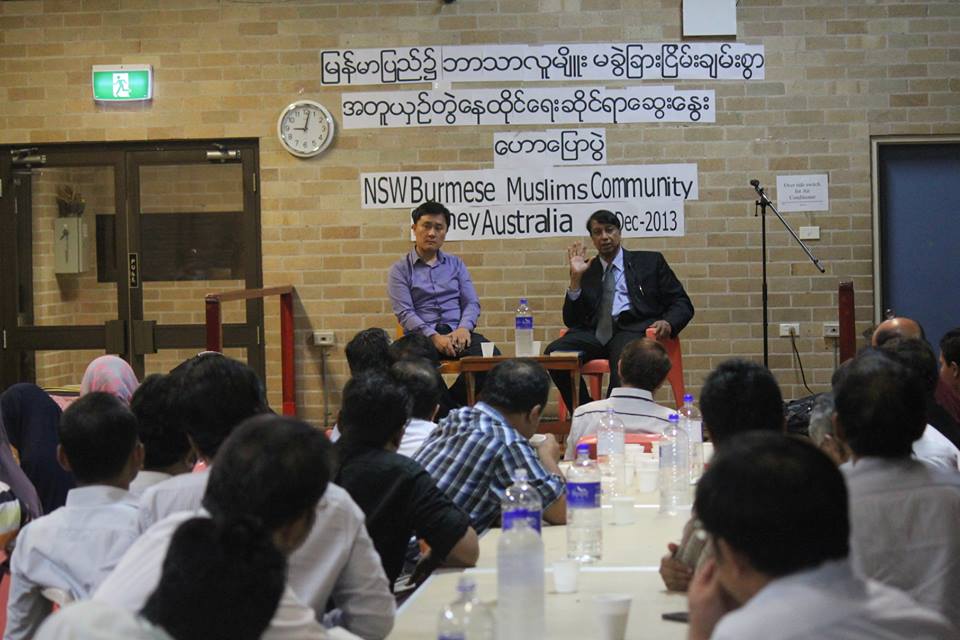
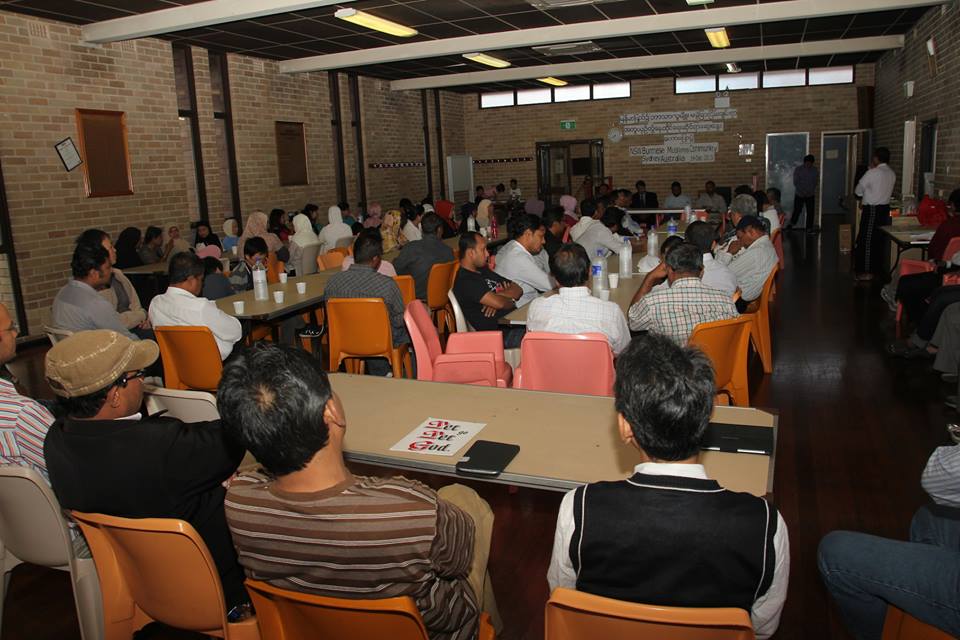
Australia ႏိုင္ငံမွ ျမန္မာမိသားစု၀င္မ်ား ၾကီးမႈးၿပီး "ဘာသာေပါင္းစံု ခ်စ္ၾကည္ရင္းနွီးစြာ အတူယွဥ္တြဲ ေနထိုင္ေရးနွင္႔ တရားဥပေဒ စိုးမိုးမႈ အေရးၾကီးပံု" ေဆြးေႏြးဖလွယ္မႈ အစီအစဥ္ကုိ ၂၀၁၃-ခု ဒီဇင္ဘာ ၁၄-ရက္ေန႔မွ ၁၉-ရက္ေန႔အထိ ဆစ္ဒနီၿမိဳ႕တြင္ က်င္းပခဲ့ရာ အလ္ဟာ၈်္ ဆရာ ဦးေအးလြင္ (အစၥလာမ္႔ ဓမၼဗိမၼာန္) တက္ေရာက္ေဆြးေႏြးခဲ့ပါသည္။

2

ဆရာ အလ္ဟာဂ်္ ဦးေအးလြင္၏ ဆစ္ဒနီျမိဳ႔ Australia နိုင္ငံသို႔ေရာက္ရွိစဥ္ ျမန္မာမြတ္စလင္ မိသားစု၀င္မ်ားနွင္႔ ေတြ႔ဆံု၍ ဘာသာလူမ်ိဴးမခြဲျခား ရင္းနွီးခ်စ္ခင္စြာ အတူယွဥ္တြဲနိုင္ေရးၾကိဳးပမ္းေနမႈမ်ားအားရွင္းလင္းတင္ျပျပီး ျမန္မာျပည္ဖြား အစၥလာမ္ဘာသာ၀င္ မိသားစုမ်ားမွလဲ ျမန္မာ၌ျဖစ္ေပၚ လ်က္ ရွိေသာ ဘာသာေရး၊ လူမ်ိဴးေရးဆန္ဆန္  ပဋိပကၡမ်ားအတြက္ အထူးပဲ စိုးရိမ္ပူပန္ေနမိၾကေၾကာင္း၊ တိုင္းျပည္သာယာ၀ေျပာေရး-ျပည္သူအားလံုး မခြဲျခား ျငိမ္းခ်မ္းစြာ ယွဥ္တြဲေနထိုင္ေရး-တရားဥပေဒ စိုးမိုးေရးတို႔မွာ Interconnected ျဖစ္ေနေၾကာင္း၊ စစ္မွန္သည္႔ ဒီမိုကေရစီေပၚမွာ အေျခခံသည္႔ ျငိမ္းခ်မ္းမႈမ်ိဴး ျမန္မာျပည္သူျပည္သား အားလံုး  အျမန္ဆံုး ခံစား စံစားနိုင္ေစဖို႔ ဆုမြန္ေကာင္းေတာင္းၾကေၾကာင္း မ်ားေဆြးေႏြးခဲ့ၾကသည္။

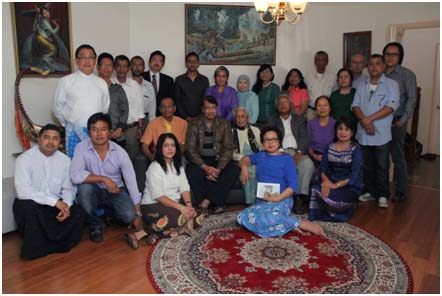
Sydney ျမိဳ႕တြင္ ဆရာဦးေအးလြင္ႏွင့္ ျမန္မာျပည္ဖြား မိသားစု၀င္မ်ား (ဗုဒၶဘာသာ၀င္၊ အစၥလာမ္ဘာသာ၀င္၊ ခရစ္ယာန္ ဘာသာ၀င္ နွင္႔ ဟိႏၵဴဘာသာ၀င္) ရပ္မိရပ္ဖမ်ား နွင္႔ ေတြ႔ဆံုရာတြင္လည္း ဆရာဦးေအးလြင္မွ ႐ွင္းလင္းေျပာၾကားခဲ့ရာတြင္ ယခုလက္ရွိ (Religions for Peace) မွ သီတဂူဆရာေတာ္ ဘုရားၾကီး အပါအ၀င္ ဆရာ ဦးေအးလြင္နွင္႔ ဘာသာေပါင္းစံုမွ ဆရာေတာ္ၾကီးမ်ားပူးေပါင္း၍ ခ်စ္ၾကည္ေရးလုပ္ငန္းမ်ား ၾကိဳးစားေဆာင္ရြက္ေနေၾကာင္း၊ RfP ၏ ရည္မွန္းခ်က္သည္ ဘာသာမတူ အယူအဆ မတူသူမ်ားအၾကား Engage လုပ္ေပးျခင္းျဖင္႔ မသမာသူမ်ား၏ ေသြးထိုး ေျခထိုး မဟုတ္ေသြးထိုး ေနမႈမ်ားေမွးမိွန္ကာ အမွန္တရားျဖင္႔ ရွင္းလင္းဖလွယ္နိုင္မႈမ်ား တိုးပြားလာမည္ျဖစ္သည္႔အျပင္ မတူလက္မ်ား ျငိမ္းခ်မ္းစြာ ယွဥ္တြဲေနထိုင္လာနိုင္ရန္ ရည္ရြယ္ၾကိဳးစားေနၾကေၾကာင္း၊ ျမန္မာျပည္တြင္း၌ျပည္သူမ်ားအား ထင္ေရာင္ထင္မွားျဖစ္ေစရန္ ၀ါဒျဖန္႔ေနမႈမ်ား (ဥပမာ – Islamization ၾသဇာလႊမ္းေအာင္ ဓားမိုးျပီးသာသနာျပဳျခင္း၊ သားေဖာက္ သာသနာျပဳျခင္း၊ အိမ္ေထာင္ျပဳျပီး သာသနာျပဳျခင္း၊ ေငြေပး စည္းရံုးျခင္း၊  ေသြးေဆာင္ ဖ်ားေယာင္းျခင္းမ်ားျပဳလုပ္ေနသည္ဟု စြပ္စြဲ ၀ါဒျဖန္႔ေနမႈမ်ား) ရွိေၾကာင္း၊ အစၥလာမ္ဘာသာ ကိုးကြယ္ေနသူမ်ားအား အႏၲရာယ္ သဖြယ္ ပံုေဖာ္ကာ ပတ္၀န္းက်င္နိုင္ငံမ်ားပင္လွ်င္ ဒီအစၥလာမ္ေၾကာင္႔ တစ္ခုျပီးတစ္ခု က်ဆံုးေနျပီ စသျဖင္႔ မိႈင္းတိုက္ေနျခင္းမ်ားသည္ အလြန္ပင္ မွားယြင္းေၾကာင္း၊Islam သည္ ျငိမ္းခ်မ္းေရးဟု အမည္ရျပီး အတင္းအဓမၼ မေလွ်ာ္ ၾသဇာသံုး ေလာကီ လာဘ္လာဘေပး ေသြးေဆာင္ ဖ်ားေယာင္းျခင္းမ်ိဴးကို အစၥလာမ္႔ တရားေတာ္အရ ခြင္႔မျပဳထားေၾကာင္း၊ Social Dispute ကို ဘာသားေရး စနက္တံ အျဖစ္ပံုေဖာ္ကာ မတည္ျငိမ္ေအာင္ ဖန္တီးေနျခင္းမ်ားသာျဖစ္ေၾကာင္း၊ Crime ကို က်ဴးလြန္သူ မည္သူမဆို ထိုသူဟာ ဘာသာ သာသနာရဲ႔ ဆံုးမမႈေအာက္က ေသြဖည္သြားသူျဖစ္၍ ဘာသာေရးနွင္႔ ဘာမွ မပတ္သက္ေသာ Criminal ၏လုပ္ရပ္ အျဖစ္ သာျမင္ရန္ လုိအပ္ေၾကာင္း (၀ါဒ နွင္႔ ၀ါဒီ) ကို ခြဲျမင္ရန္ လိုအပ္ေၾကာင္း၊ ၀ံသာနု ရကၡိတ တရားသည္ အင္မတန္ မြန္ျမတ္ျပီး ဆရာၾကီးဦးရာဇတ္မွ ဤ ၀ံသာနုရကၡိတ စိတ္ဓာတ္ (တို႔ဟာျမန္မာေတြ တို႔ျမန္မာျပည္ ျမန္မာ လူမ်ိဳးကိုခ်စ္ရမည္) ဟု ေၾကြးေၾကာ္ခဲ႔သလို မႏၱေလးျမိဳ႔ခံ သံဃာေတာ္မ်ား၏ ေထာက္ခံမႈကို လဲရခဲ႔ေၾကာင္း၊ သို႔ေသာ္ ဤ၀ံသာနုရကၡိတ တရားကို္ အတိုင္းအတာ တစ္ခုထက္ ေက်ာ္လြန္ကာ တလြဲအသံုးခ်ျပီး ကိုယ္႔အမ်ိဳးကိုယ္ ခ်စ္ျခင္းျဖင္႔ သူတစ္ပါး မုန္းျခင္းမ်ိဴး (ငါနဲ႔မတူ ငါ႔ရန္သူဟု) မျဖစ္သင္႔သည္႔ အျပင္၊ ဗုဒၶေဟာၾကားခဲ႔သည္႔ "ညာနတၱစရိယ၊ ေလာကတၱစရိယ" တရားထံုး နွလံုးမူသင္႔ေၾကာင္း၊ ျမန္မာျပည္၌ ဘယ္ဘာသာသာသနာမွ စတင္ပြင္႔ေပၚခဲ့ျခင္းမ်ိဴး မရွိခဲ႔ပါ။ သို႔ေသာ္ ေထရ၀ါဒ ဗုဒၶဘာသာကို လူမ်ားစု ကိုးကြယ္ျပီး ကမၻာေပၚ၌ ထြန္းကားေနသည္႔ ဘာသာသာသနာမ်ား ျမန္မာျပည္တြင္ က်င္႔သံုး ေနထိုင္ေနၾကသျဖင္႔ ျမန္မာရဲ႔  အလွဟာ Diversity အျဖစ္ရွိေနခဲ႔ပါေၾကာင္းတုိ႔ကုိ ေဆြးေႏြးခ့ဲသည္။

1

ထုိ႔ေနာက္ အစၥလာမ္ဘာသာ ျမန္မာျပည္ကိုေရာက္တာ ဆရာၾကီး ဗိုလ္မွဴးဘရွင္တို႔လို ျမန္မာ႔သမိုင္း ကမၻာ႔သမိုင္း ပညာရွင္ၾကီးမ်ား၏ တင္ျပခ်က္မ်ား အရ နွစ္ေပါင္း(၁၂၀၀) ေက်ာ္ခဲ႔ျပီး၊ ပုဂံေခတ္ အေနာ္ရထာ မထူေထာင္ခင္ မင္း (၁၂) ဆက္အရင္ ပိတ္သုဥ္မင္း လက္ထက္ထဲကျဖစ္ေၾကာင္း၊ အဂၤလိပ္ျမန္မာ စစ္ပြဲမ်ားအျပီး ျမန္မာဟာ အိႏိၵယရဲ႕ ျပည္နယ္တစ္ခုအျဖစ္ ျဗိတိသၽွတို႔ သတ္မွတ္လိုက္သည္႔ အတြက္ ျမန္မာဟာ ကၽြန္ေအာက္က သေဘာက္ျဖစ္ခဲ႔ရျပီးေနာက္ နယ္စီးမျခား ကူးသန္း သြားလာမႈမ်ားလည္း ရွိခဲ႔သည္႔ အတြက္ ေျမာက္မ်ားစြာေသာ ဘာသာစံု လူမ်ိဳးစံု ၀င္ထြက္မႈရွိခဲ႔ေၾကာင္း၊ ျမန္မာျပည္ဟာ ပန္းေတြ အလံုးစံုနဲ႔ အင္မတန္လွတဲ႔ ဥယ်ာဥ္သဖြယ္ပါ။ ပန္းတစ္ပြင္႔ထဲ ရွိခ်င္လို႔ မတူကြဲျပားတဲ႔ တစ္ျခားပန္းေတြကို Bulldozer နဲ႔ ထိုးျပီးေတာ႔ တစ္မ်ိဴးထဲ ရွိရမယ္ဆိုရင္ ပန္းတစ္ပြင္႔ထဲလွခ်င္ေတာ႔လွမယ္ သို႔ေသာ္ အလွကေတာ႔ မဆံုနိုင္ဘူး။ အလွဆိုတာ မတူကြဲျပားမႈမ်ားေၾကာင္႔ ရွိေနတာျဖစ္ေၾကာင္း၊ ပညက္ေတာ္ ၁၀ ပါးထဲက ၂ပါးေလာက္ကို နိုင္ေအာင္က်င္႔ျပီဆိုရင္၊ ကံ ၅ပါးကို လံုေအာင္ က်င္႔နိုင္ျပီဆိုရင္ ပဋိပကၡေတြ ေတာ္ေတာ္ ျငိမ္းသြားမည္။ Buddhism မွာ လူကုိၾကည္႔ရင္ "ရုပ္ နဲ႔ နာမ္" ကိုသာ ရႈရမည္ျဖစ္ျပီး အသားအေယာင္၊က်ား/မ စသျဖင္႔ခြဲျခားမရႈရ။ Buddhism အရ တရုတ္၊ ကုလား၊ဗမာ၊ စသျဖင္႔ ခြဲျခားမႈ မျပဳပဲ ေကာင္းေသာသူ နွင္႔ ဆိုးေသာသူဟူ၍ သာ ရႈျမင္ရန္ေဖာ္ျပ ထားေၾကာင္း၊ သို႔ပါ၍ ဤ ဘာသာေပါင္းစံု ခ်စ္ၾကည္ေရး ေဆာင္ရြက္ေနေသာ ဆရာေတာ္ၾကီးမ်ားသည္ မိမိတို႔ ဘာသာအတြင္း၌ Intra-faith  (မိမိဘာသာရဲ႔ သြန္သင္ ဆံုးမမႈ)ကိုနားလည္ သေဘာေပါက္ေစရန္ ရွင္းျပေနၾကသလို Inter-faith (ဘာသာေပါင္းစံု ခ်စ္ၾကည္ရင္းနွီး ဖလွယ္မႈ) မ်ားလည္းေဆာင္ရြက္ေန ပါေၾကာင္း ရွင္းလင္းတင္ျပသြားသည္။

3

ဤအစီအစဥ္တြင္ ျမန္မာျပည္ဖြား ရပ္မိရပ္ဖမ်ားထဲမွလည္း ဘာသာေပါင္းစံု ခ်စ္ၾကည္ရင္းနွီးစြာ အတူယွဥ္တြဲေနထိုင္ေရးကို ျမန္မာျပည္မွ သီတဂူ ဆရာေတာ္ ဘုရားၾကီး အပါအ၀င္ ဆရာဦးေအးလြင္နွင္႔ ဘာသာေပါင္းစံုမွ ဆရာေတာ္ၾကီးမ်ား ပူးေပါင္း၍ ၾကိဳးစားေဆာင္ရြက္ေနျခင္းမ်ားအေပၚ အထူးပဲ ေလးစား ဂုဏ္ယူမိၾကေၾကာင္း၊ ေရွးယခင္ကတည္းက ေအးအတူပူအမွ် အတူ ယွဥ္တြဲေနထိုင္လာခဲ႔ၾကေသာ ဤတိုင္းရင္းသား ျမန္မာလူမ်ိဴးမ်ား အခ်င္းခ်င္း ဘာသာမတူ ကိုးကြယ္မႈ အေပၚ စိတ္၀မ္းကြဲမႈမ်ားမွ အဓိကရုဏ္းမ်ားျဖစ္လာရသည္ အထိ ဆိုးရြားလာမႈအေပၚ ဆစ္ဒနီျမိဳ႔ရွိ ျမန္မာ မိသားစု၀င္မ်ားမွ အထူးပဲ စိုးရိမ္ ပူပန္ေနၾကေၾကာင္း၊ Australia နိုင္ငံတြင္ Multicultural Societies ေတြစုေပါင္းျပိိး ျငိမ္းခ်မ္းစြာ အတူ ယွဥ္တြဲေနထိုင္နိုင္ရျခင္းမွာ Rule of Law ဟူေသာ တရားဥပေဒ စိုးမိုးမႈ ခိုင္မာျခင္းေၾကာင္႔ ျဖစ္၍ ျမန္မာနိုင္ငံတြင္ တရား ဥပေဒစိုးမိုးမႈသည္ Peaceful Coexistence အတြက္ အဓိကအခန္းက႑ တစ္ရပ္ျဖစ္ေၾကာင္း၊ ျငိမ္းခ်မ္းေရးကို လိုလားေသာ လူအဖြဲ႔အစည္းမ်ားမွ တစ္ဖက္က ျပည္သူေတြ အၾကား ၾကိဳးစားေဆာင္ရြက္ေနစဥ္မွာ ျမန္မာျပည္မွ နိုင္ငံေတာ္ အာဏာပိုင္ အဖြဲ႔အစည္းမ်ား အေနျဖင္႔လဲ တရားဥပေဒစိုးမိုးမႈကို အေျခအေနအခ်ိန္အခါ အလိုက္ ခြဲျခားမႈမ်ိဴးမဟုတ္ပဲ တရားမွ်တစြာ ထိထိေရာက္ေရာက္ေဖာ္ေဆာင္သင္႔ေၾကာင္း ျမန္မာျပည္သူျပည္သားမ်ား အေနျဖင္႔လဲ ဘာသာေရး၊ လူမ်ိဴးေရးဆန္ဆန္ ပဋိပကၡမ်ားတြင္ အလြယ္တကူ နားေယာင္တာမ်ိဴး မဟုတ္ဘဲ အေျခအေနျဖစ္ရိုးျဖစ္စဥ္ကို ေသခ်ာေလ႔လာ အကဲခတ္သင္႔ေၾကာင္း၊ ယခုလို မတည္ျငိမ္မႈမ်ားအား Unholy Allies ဟုေခၚသည္႔ မသမာသူ လူတစ္စုမွ အကြက္က်က် စီစဥ္ေဆာင္ရြက္ေန ဟန္တူေၾကာင္း၊ ထို ပဋိပကၡမ်ား အျမန္ဆံုး ရပ္တန္႔သြားဖို႔ ဘာသာေရး အဖြဲ႔အစည္းမ်ား၊လူမႈေရး နယ္ပယ္အသီးသီးမွ အဖြဲ႔အစည္းမ်ား နွင္႔ နိုင္ငံေရးပါတီမ်ား၊ အားလံုးစုေပါင္း၍ ၾကိဳးစားမႈ မျပဳပါက တုိင္းျပည္ ပ်က္သုဥ္း ေခတ္ေမွာင္မွာ ျပန္ရုန္းရ ကိန္းစိုက္နိုင္ေၾကာင္းတုိ႔ကုိ ျမန္မာျပည္ဖြား မိသားစု၀င္ ရပ္မိရပ္ဖမ်ားမွာ ၀ိုင္း၀န္းျပီး အားၾကိဳး မာန္တက္ေဆြးေႏြးခဲ့ၾကပါသည္။

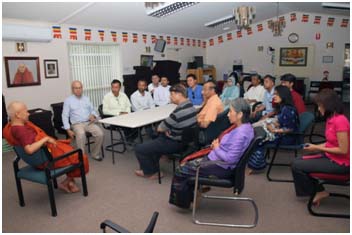
၎ေနာက္ ဆရာ အလ္ဟာ၈်္ ဦးေအးလြင္သည္ ဆစ္ဒနီျမိဳ႔သို႔ေရာက္ရွိစဥ္ ျမန္မာဗုဒၶဘာသာဘုန္းေတာ္ၾကီး ေက်ာင္းတိုက္ (Ochardleigh Street, Yennora, New South Wales) သို႔  သြားေရာက္လည္ပတ္ျခင္း၊ျမန္မာခရစ္ယာန္ ဘာသာဘုန္းေတာ္ၾကီးမ်ားနွင္႔လည္း (Carbramatta West Rd, Carbramatta, NSW) ရွိ Church သို႔ ေလ့လာေရးသြားေရာက္လည္ပတ္ခဲ့သည္။

4

ျမန္မာ႔ Community BCBG Radio, SBS Burmese Radio နွင္႔ ABC Radio Australia  အစီအစဥ္မ်ားနွင္႔  အင္တာဗ်ဴးမ်ား ျပဳလုပ္ခဲ႔စဥ္ ဆရာ အလ္ဟာ၈်္ ဦးေအးလြင္မွ ရွင္းလင္းေဆြးေႏြးခဲ႔သည္မ်ားမွာ ယခင္႔ယခင္ကတည္းက ျမန္မာ၌ ဘာသာေပါင္းစံု လူမ်ိဴးေပါင္းစံု ခ်စ္ခင္ရင္းနွီးစြာ အတူတကြ ယွဥ္တြဲေနထိုင္လာခဲ႔ၾကပံု၊ အစၥလာမ္ဘာသာ ျမန္မာျပည္သို႔ ေရာက္ရွိခဲ႔သည္မွာ နွစ္ေပါင္း ၁၂၀၀ ေက်ာ္ရွိခဲ့ျပီျဖစ္ျပီး ျမန္မာျပည္ဖြား အစၥလာမ္ ဘာသာ၀င္မ်ားဟာ ျမန္မာျပည္ကို ခ်စ္ျမတ္နိုး ျမန္မာျပည္အတြက္ အလုပ္အေကၽြးျပဳခဲ႔ၾကျပီး တိုင္းျပည္ဖြံ႔ျဖိဳး တိုးတက္ေရးအတြက္ ေခာတ္ အဆက္ဆက္ ပါ၀င္ၾကိဳးစားခဲ႔ပံု၊ ပန္းဥယ်ာဥ္တြင္ ပန္းမံေပါင္းစံုေၾကာင္႔ အလွတင္႔သကဲ႔သို႔ ျမန္မာျပည္၌လဲ ဘာသာစံု လူမ်ိဴးစံု DiverseCulture ျဖင္႔  အလွဂုဏ္ မာန္တင္႔ခဲ႔ေသာ History ရွိခဲ႔၍ မတူကြဲျပားမႈမ်ားအား Thread ဟုမယူဆပဲ Strength ဟုယူဆကာMulticultural Diversity မွ တိုင္းျပည္ ဖြံ႔ျဖိဳးတိုးတက္မႈသို႔ ေဖာ္ေဆာင္သြားသင္႔ပံုတုိ႔ကုိ ဆရာဦးေအးလြင္က ထည့္သြင္းေျပာၾကားသြားခဲ့ပါသည္။

အင္တာဗ်ဴးမ်ား

BCBG Radio Interview (29th Dec 2013) (ျမန္မာ):

မူရင္းလင့္=> http://bcbgsydney.blogspot.com.au/
Download ယူရန္ Click Here

SBS Burmese Radio Interview (ျမန္မာ):

မူရင္းလင့္=> http://www.sbs.com.au/yourlanguage/burmese/highlight/page/id/307818/t/U-Aye-Lwin-Islamic-leader-and-Religious-for-Peace-Myanmar
Download ယူရန္ Click Here

ABC Radio Interview (ျမန္မာ):

မူရင္းလင့္=>  http://www.radioaustralia.net.au/burmese/radio/onairhighlights/1238762
Download ယူရန္ Click Here

Mystery of Flow of Thousands of Rohingya Through Thailand Deepens as Families Flee Shelter

Source Phuketwan, 7 Jan

Rohingya among the group that fled a family shelter north of Phuket
Photo by phuketwan.com
PHUKET: Thirteen women and children, among the latest Rohingya arrivals, have quickly vanished from a family shelter north of Phuket with serious questions now being asked about the human trafficking of thousands of people through Thailand.


The escapers - believed to have fled the family shelter in Khao Lak with the help of people traffickers - include a boy aged two who was scheduled to have an operation to relieve a large genital hernia at a local hospital tomorrow.


The women and children were from a boatload of 139 Rohingya apprehended in a forest in Phang Nga province on Christmas Day. The whereabouts of the scores of men and teenage boys from the vessel is not known.

Two more boatloads of 196 and 204 Rohingya - apparently with some Bangladeshis among them - arrived in Thailand on January 1, according to passengers spoken to by Thai media outlets.

Some of those illegal arrivals were subsequently involved in a horrific pickup crash last week that left administrating doctors at a Thai hospital asking whose responsibility it is to care for several critically injured Rohingya for the rest of their lives.

The crash was thoroughly reported on Thailand's popular Channel 3 last night, with doctors noting that one person was killed in the crash, four others were left in comas and four more remain critically injured.

It's thought that the pickup was carrying 18 men and boys to one of several secret traffickers' camps in the jungles of southern Thailand, where thousands of Rohingya, escaping persecution in Burma, are delivered into the hands of sometimes-brutal people traffickers.

The survivors who escaped the pickup crash unscathed and the Thai drivers are believed to have been carried away from the scene of the crash in a second vastly overloaded pickup.

The questions raised by Dr Watdhanachai Kulwiwat and Dr Kitpanu Worgyongsin at Had Yai Hospital about where the Rohingya came from and who cares for them were rippling further afield today.

Local police said the seriously injured Rohingya would be charged with being illegal immigrants and the pickup driver will also be charged, if he is ever apprehended.

How thousands of boatpeople manage to travel south from Burma at sea, be transferred to land in Thailand then hidden for days or weeks in the jungles of southern Thailand without being detected by the Royal Thai Navy, Marine Police, local police the Army or other authorities in uniform remains a complete mystery.

Fifteen-year-old Abu Fayap, speaking while on life support after being transferred with other Rohingya to Had Yai Hospital, told Channel 3 that along with the other seriously injured men he had already paid 50,000 baht to traffickers to be smuggled to Malaysia from Arakan state in Burma through Thailand.

The boy's version of how he was transferred at sea from a small boat in Burma to a much larger boat, then to the boat holding 196 somewhere off the coast of Thailand, tended to confirm that the smuggling of the Rohingya along Thailand's coast is now a large multi-million dollar industry.

Phuketwan reporters have been told that drug smugglers along Thailand's Andaman coast have switched to human traffickingbecause the trade in human flesh is more lucrative and less dangerous.

Nobody can remember the last time any human trafficker was apprehended at sea off Thailand.

Since the Royal Thai Navy sued Phuketwan for criminal defamation under the Computer Crimes Act in December, Channel 3 and Thailand's mainstream media have begun asking more questions about the growing exodus of thousands of Rohingya from Burma, how these people travel through Thailand and who benefits from trafficking them.

Tuesday, 7 January 2014

Rohingya Boy to Have Operation: Hundreds More Boatpeople Make Secret Journey Through Thailand

Source phuketwan, 6 Jan

The boy and his family soon after they arrived in Thailand from Burma
Photo by phuketwan.com
PHUKET: A young boy who arrived in Thailand on a Rohingya boat on Christmas Day with 138 others is to have an operation this week to fix a genital hernia, Phuketwan has learned.

According to reports, the Rohingya, stateless and persecuted inside Burma, are also refused access to hospitals.

Thirteen women and children from the Christmas Day boat are now being accommodated in a family shelter in Khao Lak, north of Phuket. It's thought that the menfolk associated with the families are also being held somewhere in Phang Nga province.

Local Immigration officials decline to say what has happened to the menfolk or to the other Rohingya who arrived on the boat. It's thought that, with the exception of the families, the other men and boys have probably already been ''deported'' through the Thai-Burma port of Ranong.

As Burmese authorities do not accept back Rohingya who flee the country, ''deported'' usually means they have been put back on a boat at sea, and probably transferred into the arms of traffickers.

After extensive health checks, the women and children arrived at thePhang Nga family shelter on January 1 and later that day a person thought to be a trafficker came to visit, returning at dusk.

Staff at the shelter intervened to prevent the person driving off with the women and children.

It's not known how long the women and children will be detained at the shelter. The group joins 13 other Rohingya women and children, the remnants of more than 70 apprehended early last year. The others have all escaped with the help of traffickers.

Details have emerged about how a pickup loaded with Rohingya came to be in Sadao, close to Thailand's southern border with Malaysia, where it overturned, killing one man and seriously injuring others, on Thursday.

Survivors have said they were among a group of 196 Rohingya who came ashore in Ranong last Wednesday.

The boatpeople were all hidden in pickups under tarpaulins then driven south towards the border, according to survivors.

When paramedics reached the scene of Thursday's crash they found only eight injured and one dead man. At that stage the driver had vanished, along with the remaining healthy occupants and the pickup's numberplates.

One of the injured remains critical in intensive care while four are still in serious condition. The youngest is 15.

The Superintendent of Khlong Nae Police Station, Colonel Worachat Rosjan, confirmed the crash and said the injured had been recorded as ''Burmese Muslims.''

It is thought that the pickup was probably on its way to one of several secret camps set up by traffickers in the jungle to hold hundreds of Rohingya while their sale is negotiated to family and friends across the border in Malaysia.

Thousands of Rohingya are fleeing Burma at the instigation of Buddhist neighbors and officials who want Muslims out of the country.

Sunday, 5 January 2014

Events in Myanmar are crime against Humanity

Source harakahdaily, 4 JAn

The scale of the slaughter, persecution, torture and savagery experienced during the ruthless ethnic cleansing campaign against the Rohingya Muslims in the Myanmar province of Rakhine stagger the imagination.


As a result of the slaughter and displacement carried out in the light of the systematic cleansing policy waged since 1942, only 700,000 out of the original four million Muslims in the region remain. To date, three million Muslims have been forced to migrate to neighboring countries, hundreds of thousands of Muslims have been martyred, tens of thousands of settlement units have been burnt and destroyed, tens of thousands of women have been raped, and hundreds of mosques and madrassas have been destroyed. Thousands of Muslims are known to have been imprisoned and tortured, though their fates are unknown.


In recent years, since the Bangladeshi government closed its borders to the refugees, hundreds of Muslims seeking to flee to that country have drowned in the seas and rivers on the frontier; and  this plays into the hands of the Myanmar regime that wishes to entirely purge the country of Muslims.


Our Muslim brothers have been burned alive in their homes in more than 330 attacks, which have worsened since June of last year, in which Muslim villages, including mosques and madrassas were burned. According to independent human rights organizations, in June 2012 alone, 1,000 Muslims in the region were ruthlessly martyred and 125,000 people were forced from their homes and villages and left to survive in the jungle.


Human Rights Watch has published a 153-page report concerning the crimes against humanity perpetrated against the Rakhine Muslims in recent months: The report accuses Myanmar authorities of engaging in ethnic cleansing of Rohingya Muslims in Rakhine. According to a UN statement, the Rakhine Muslims are the most persecuted social group in the world.


Although the Myanmar regime seeks to give the impression it is not involved in acts of violence and terror, it still supports this genocide by turning a blind eye to attacks, preventing humanitarian aid from reaching Muslims, restricting their freedom to travel and live as human beings and is protecting the aggressors.


Furthermore, the policies and sanctions imposed on Muslims by the state are completely inhuman.


The Rohingyan Muslims enjoy no citizenship rights and have no access to any state benefits. They cannot obtain passports and are not admitted to state hospitals. They are forced to work for nothing for the state or in private institutions. They have no rights to enter the civil service or even study beyond high school.


Muslims have to pay taxes simply to go from one village to another. They are not allowed out after 9:00 in the evening, even to visit relatives or neighbors, without police permission.


Muslims are not allowed to build concrete homes; they can only live in wooden huts and even these meager dwellings belong to the state. They are not allowed to have landlines or mobile phones nor can they own motor vehicles.


They have no right to a defense when a crime is committed, and are imprisoned straight away. The police or military can raid their homes on no grounds. They can be arrested arbitrarily for no reason.


The elimination of Muslims in Myanmar, ruled by a military junta between 1962 and 2011, has literally become a policy of state. Power passed to a supposedly democratic administration, still under the control of the communist military junta, in the wake of elections in which wide-ranging fraud took place. As a result, the same military junta is continuing with the same policy through a puppet government. The aim is to eliminate the Muslim population by annihilating it or forcing it into exile.


To date, the persecution of Muslims in Rakhine has been portrayed as an ethnic conflict attributed to fanatical Buddhists. The fact is however, as everyone knows, that because of their beliefs, Buddhists are simple, harmonious and peace-loving people who strongly avoid killing. It is gangs and terror organizations affiliated to the communist secret state that are now known to be the real culprits. The terror group known as "Lion Thein" used to be responsible for the bulk of the violence and killing, although the "969 Movement" has begun assuming responsibility for the recent wave of violence.


The members of these gangs generally consist of militants from Myanmar who have received communist guerrilla training in Thailand and China. The striking similarity to ethnic cleansing against Muslims in East Turkestan suggests that communist China - Myanmar's friend and ally - is likely also behind the scenes.


Myanmar, with its rich underground resources, oil reserves and energy sources, and an important staging position for Middle East oil and gas, is one of China's most valued strategic partners and it is perhaps not too much to say that the last thing the communist Chinese state would want is to see Muslims having any say in the country.


As long as so many countries sit back as always and watch the oppression, violence and slaughter inflicted on Muslims across the world, nothing will change in Rakhine. The picture that has remained unchanged for decades is a clear sign that until Muslims heed these verses and unite this pain will never end:


"Those who are unbelievers are the friends and protectors of one another. If you do not act in this way there will be turmoil in the land and great corruption" (Quran, 8:73)


And "those who, when they are wronged, defend themselves" (Quran 26:39)


Those who are unwilling to see Muslims come together and act as a single body, or who regard it as unnecessary, or who remain passive and timid, will have to bear the conscientious responsibility for this suffering, pain and shedding of Muslim blood.

Thursday, 2 January 2014

Archbishop of Rangoon calls for Rohingya citizenship

Source DVB, 1 Jan

In his New Year message to the Roman Catholics of Burma, Monsignor Charles Bo called for unity between the "different souls" of "this wonderful nation" and pointed particularly towards the Rohingya Muslims of western Burma, saying those born in the country should be granted citizenship.

Rangoon Archbishop Charles Bo (PHOTO: UCA News)Rangoon Archbishop Charles Bo (PHOTO: UCA News)

The archbishop further called for an end to violence against the Rohingyas, and urged the country to instead fight against poverty and human trafficking.

"On the eve of the New Year, Myanmar prepares for the dawn of a new era characterized by freedom, democracy, justice, peace, hope and fraternity among the different souls of this wonderful nation," wrote Msgr Charles Bo in AsiaNews in a message addressed for 1 January 2014 on the occasion of the World Day of Peace.

He noted that Burma has "opened its doors to the world" over the past two years through a series of reforms in favour of democratic freedoms as well as some major economic, social and political reforms. He said that for the first time in over 50 years, there are "concrete reasons for hope" for the future.

Citing the communal violence aimed at Rohingyas and other Muslims, he said, "Without fraternity it is impossible to build a just society and a stable and lasting peace."

Emphasizing the value of unity in diversity, Archbishop Bo invited the Burmese government and the international community to resolve the issues related to citizenship, according to the principle that every person born in Myanmar should be recognized as a citizen of Burma.

Msgr Bo further noted that other "tragedies", such as the ongoing conflict in Kachin State, cause "great harm" to the nation.

"I wish all my brothers and sisters, of all religions and ethnicities, throughout our nation a truly happy and blessed New Year," he concluded.

Joint Mission Statement “Inhumane Environment” in Rohingya Camp

Press statement, 30 Dec 2013   
                                                                            
The international community is deeply concerned by the dire humanitarian situation faced by internally displaced persons (IDPs) in Taung Paw camp in Myebon Township, Rakhine State and strongly urges the Union Government to ensure immediate, full, and unimpeded humanitarian access to those in need. The deteriorating living conditions in the camp have created an inhumane environment for camp residents.

The 752 families living in the camp for the past 14 months face very poor living conditions, including lack of safe drinking water, limited healthcare services, malnutrition, and restrictions on movement outside the camp.

The international community has received credible reports that local community members in Myebon town have harassed humanitarian staff and impeded access for humanitarian supplies to the people in need in Taung Paw camp. These actions are unacceptable. Many of us have recently traveled to Rakhine State to affirm the uncompromisable international principle of full and unimpeded humanitarian access to all those in need. Union-level and local officials alike have publicly vowed to enforce this principle without delay. Despite these promises, we have yet to see effective action. The international community urges authorities to ensure humanitarian access immediately and without further delay to allow aid to reach those in desperate need, and take immediate and firm action against responsible individuals, including those who seek to block humanitarian aid and intimidate, harass, or harm humanitarian workers.

Furthermore, the international community calls for increased security to allow camp residents to safely move in and out of the camp, in order to ensure their access to markets and livelihoods, and for international health workers to be allowed to spend the night in camps to increase healthcare access. Development assistance and inward investment to Rakhine State, for the benefit of all communities, will only come when situations like that in Myebon are adequately addressed. The international community remains ready to further cooperate with the Government in this issue of utmost importance.

Embassy of Switzerland
Embassy of the Republic of Turkey
Embassy of the United States of America
Delegation of the European Union

IDPs at Taung Paw Camp in Rakhine State (PHOTO: UK Foreign and Commonwealth Office / flickr)

Wednesday, 1 January 2014

Nine Rohingyas missing in Naff River

Source Kaladanpress, 31 Dec 2013

Boats carrying Rohingya Muslims from Myanmar, trying to cross the Naf River into Bangladesh to escape sectarian violence, are intercepted by Bangladeshi Coast Guard officials in Teknaf on June 18, 2012.

Teknaf, Bangladesh: Nine Rohingya passengers were missing by sinking a boat in Naff River while crossing the Naff River from Zadi Mora Point to Burma yesterday, Lalu Meah, a local fisherman from Teknaf said.

Heavy and squally winds sank a small passenger row boat with 18 Rohingyas who were crossing the Naff River from Jadi Mora entry point of Teknaf, Bangladesh to Burma on December 30 at about 6:30pm, Lalu Meah said.

In the accident, nine Rohingya passengers including children were rescued by some fishermen but other nine Rohingyas have been missing in the Naff River, sources said.
After getting information, the Teknaf Border Guard Bangladesh (BGB) Battalion No. 42 rushed to the spot and rescued some passengers, but others were not able to rescue by BGB as the situation was very cold and foggy.

However, they will try to rescue the rest missing Rohinya passengers later, BGB sources said.

Some passengers came to Bangladesh for medical treatment and others came to visit their relatives in the refugee camps. After completing their purpose, they returned to Burma through the Jadi Mora entry point, said a local named Kamal. 

In July 2013, eight Rohingya passengers died in this area while crossing the Naff River from same entry point of Teknaf by row boat.

A Roingya elder Kolil (not real name) said, "Rohingyas are unlucky people as they were killed by local authorities, Rakhines, Budddhist monks, died in the sea while journey to Malaysia, died in the IDP camps because of lacking of proper treatment and medicines and even died by sinking boats in the Naff River.

I worked on the US drone program. The public should know what really goes on

Source theguardian, 29 Dec 2013
Few of the politicians who so brazenly proclaim the benefits of drones have a real clue how it actually works (and doesn't)
 
Hermes 450 drone
An Elbit Systems Hermes 450 drone. Photograph: AFP/Getty Images

Whenever I read comments by politicians defending the Unmanned Aerial Vehicle Predator and Reaper program – aka drones – I wish I could ask them a few questions. I'd start with: "How many women andchildren have you seen incinerated by a Hellfire missile?" And: "How many men have you seen crawl across a field, trying to make it to the nearest compound for help while bleeding out from severed legs?" Or even more pointedly: "How many soldiers have you seen die on the side of a road in Afghanistan because our ever-so-accurate UAVs [unmanned aerial vehicles] were unable to detect an IED [improvised explosive device] that awaited their convoy?"

Few of these politicians who so brazenly proclaim the benefits of drones have a real clue of what actually goes on. I, on the other hand, have seen these awful sights first hand.

I knew the names of some of the young soldiers I saw bleed to death on the side of a road. I watched dozens of military-aged males die in Afghanistan, in empty fields, along riversides, and some right outside the compound where their family was waiting for them to return home from the mosque.

The US and British militaries insist that this is an expert program, but it's curious that they feel the need to deliver faulty information, few or no statistics about civilian deaths and twisted technology reports on the capabilities of our UAVs. These specific incidents are not isolated, and the civilian casualty rate has not changed, despite what our defense representatives might like to tell us.

What the public needs to understand is that the video provided by a drone is not usually clear enough to detect someone carrying a weapon, even on a crystal-clear day with limited cloud and perfect light. This makes it incredibly difficult for the best analysts to identify if someone has weapons for sure. One example comes to mind: "The feed is so pixelated, what if it's a shovel, and not a weapon?" I felt this confusion constantly, as did my fellow UAV analysts. We always wonder if we killed the right people, if we endangered the wrong people, if we destroyed an innocent civilian's life all because of a bad image or angle.

It's also important for the public to grasp that there are human beings operating and analysing intelligence these UAVs. I know because I was one of them, and nothing can prepare you for an almost daily routine of flying combat aerial surveillance missions over a war zone. UAV proponents claim that troops who do this kind of work are not affected by observing this combat because they are never directly in danger physically.

But here's the thing: I may not have been on the ground in Afghanistan, but I watched parts of the conflict in great detail on a screen for days on end. I know the feeling you experience when you see someone die. Horrifying barely covers it. And when you are exposed to it over and over again it becomes like a small video, embedded in your head, forever on repeat, causing psychological pain and suffering that many people will hopefully never experience. UAV troops are victim to not only the haunting memories of this work that they carry with them, but also the guilt of always being a little unsure of how accurate their confirmations of weapons or identification of hostile individuals were.

Of course, we are trained to not experience these feelings, and we fight it, and become bitter. Some troops seek help in mental health clinicsprovided by the military, but we are limited on who we can talk to and where, because of the secrecy of our missions. I find it interesting that the suicide statistics in this career field aren't reported, nor are the data on how many troops working in UAV positions are heavily medicated for depression, sleep disorders and anxiety.

Recently, the Guardian ran a commentary by Britain's secretary of state for defence, Philip Hammond. I wish I could talk to him about the two friends and colleagues I lost, within a year of leaving the military, to suicide. I am sure he has not been notified of that little bit of the secret UAV program, or he would surely take a closer look at the full scope of the program before defending it again.

The UAVs in the Middle East are used as a weapon, not as protection, and as long as our public remains ignorant to this, this serious threat to the sanctity of human life – at home and abroad – will continue.

• Editor's note: Heather Linebaugh does not possess any classified material and has honored her non-disclosure agreement since the time of her discharge.