Wednesday, 30 June 2010

The weak points of Burma’s ethnic resistance groups – Lt-General Yawd Serk

The Nation (Thailand), Tue 29 Jun 2010 


For more than 50 years, the ethnic resistance groups struggling against the Burmese military government have failed to achieve success. To identify the reasons for this failure we need to evaluate our weak points.
First, our love for the nation is mainly dependent on each individual situation and position. We have failed to find a strong unity that would enable us to reach our goal.

Second, on the political front, we laid out different policy objectives, with some groups aiming at a federal Burma and others wanting total independence. These different political ideologies mean we have fought against one another- a fight that has been fuelled by people’s lack of political knowledge and a lack of education that means many are easily manipulated.
On the other hand, the educated scholars are reluctant to face the hardship of struggle, and only provide moral support from the shelter of their homes. Very few educated people have made the sacrifice to come out and work for their people.

In addition, many involved in the struggle do not know how to differentiate between friend and foe. Faced with disagreement and disapproval, they break up into small factions and bow to the enemy. They become informants, giving the enemy knowledge of weak points of the resistance groups. They forget who the real enemy is.

Disagreement and argument are a natural part of internal affairs. But whatever the disagreement and however big the argument, we should not break up. We should come face to face, reconcile, compromise and find a way to beat the enemy. This means paying more attention and care to the role of alliances.
In the past, we made alliances not with our hearts but with words. These prioritised the interests of each individual and organisation over the common interest. When the enemy attacked one group, its ally failed to help, because it was not being directly attacked. But if the enemy defeated the first group, its ally would be the next target. This demonstrates that the role of an alliance should be to help one another finish off the enemy.
Third, putting individual ego before the national interest means no unified group can form – there are always splits in the gathering. Fights broke out among the groups over control of territory, but they failed to protect the people or rehabilitate country.
We could not beat the enemy because we were distracted by self-interest and disputes that weakened our unity. It is not the external enemy but the enemy within that has been responsible for the destruction of resistance groups. The lesson is clear: we must work towards reconciliation and building a strong unity via the right policies. Otherwise, there are too many obstacles on our path to success.
Fourth, if we compare our struggle with that of Vietnamese leader Ho Chi Minh’s, our efforts are no match for his. We need competent political and military leaders as well as educated people. Our people need the capacity to develop.

Shan political parties are unreliable, as most of the politicians are stuck in their houses due to the threats from the enemy. The pressure and threats from the Burmese regime prevent them from laying out the same policies as the armed groups do.

If we adopted the same political ideology of self-determination, and united against the Burmese regime, it would not be difficult to lay out political strategies. But the ethnic minority groups that wanted to become part of a federated Burma have not been able to agree with those who were fighting for total independence. As a result, finding unity has been delayed. If the ethnic Wa, Palung, Pa-O and Lahu groups could accept that ethnic nationalities have lived together peacefully in Shan State since ancient times, then a new federated Shan State is not far away. We can overcome the difficulties and guarantee the rights of the ethnic groups through open discussion.

Fifth, when the armed groups began agreeing ceasefires with the Tatmadaw (Burma’s military), they lost political ground. The Burmese regime now has the upper hand in negotiations with them.
The ceasefire groups mistakenly believed that they would be able to talk politics with the regime. In the meantime, they thought they would be able to recruit, boost funds and stockpile weapons. However, the regime has played a clever game, preventing the ceasefire groups reaching both their political and military goals.

The regime offered ceasefire talks for two reasons:
1. The internal political conflict intensified in Burma after Aung San Suu Kyi became more actively involved in the politi cal movement. The regime needed to solve its internal problems first.
2. In 1989, many ethnic armed groups mutinied from the Burma Communist Party led by Thakin Pa Thein Tin. At this point, the regime was afraid that the ethnic groups would form into a single opposition force, so offered ceasefire agreements in return for concessions. The regime was desperate to prevent the groups forming an alliance with Aung San Suu Kyi’s National League for Democracy.

(This familiar tactic of the Burmese regime is often characterised thus: “When it is weak it will kneel down and beg for mercy, but when it is strong it will ignore your requests and cut off your begging hands.”)
Twenty years on since the policy of ceasefires began, the philosophy of solving political conflicts through political means has not materialised. Some ceasefire groups have abandoned their beliefs after receiving economic privileges from the regime, while others have been left in a dilemma over their political stance. With their political objectives derailed, they are now reacting to the regime’s oppression in an ineffective day-to-day way. As a result, lasting peace is even further from their grasp.

Moreover, if the ceasefire groups agree to participate in this year’s election or agree to transform into border guard forces, militia or police, their original political objectives will have clearly failed. The 2008 constitution is not accepted by all ceasefire groups but by contesting the election, they will automatically relinquish their political objectives.

Lastly, so far, the ethnic armed groups have only adopted guerrilla tactics in the struggle against the Tatmadaw. A large offensive with military strategy that could match that of the Burmese army has not been carried out. No central command has been formed, and battalions and brigades fail to take commands from their headquarters. In contrast to this weak and ineffective command structure, the battalions of the Burmese army obey orders from above in all cases. We have to face the fact that the Tatmadaw is stronger and better in controlling its troops. Even though the regime’s political and human-rights reputation has been shattered, their decades-long grip on power remains strong.

Lt-General Yawd Serk is chairman of the Restoration Council of the Shan State.

Sanctions force departure of Burmese general’s student daughter

Like many overseas students, Zin Mon Aye hoped to parlay her accounting degree into permanent residency. But her days in Australia were numbered once officials from the Department of Foreign Affairs and Trade learned she was on campus at the University of Western Sydney.


Ms Aye, 25, is the daughter of Brigadier-General Zin Yaw, a senior figure in the Burmese dictatorship.
Australia is a party to sanctions supposed to put pressure on the regime by targeting its leaders and their families.

Foreign Minister Stephen Smith decided in 2008 that allowing Ms Aye to stay in the country would be at odds with Australia’s international policy on Burma.
She is expected to return to Burma within days, having fought Mr Smith all the way to the full bench of the Federal Court, and lost.

“Sadly, she’s being punished for something of which she is innocent,” said her lawyer, Tony Silva.
According to the court decision this month, Ms Aye said “she was estranged from her parents because of her father’s association with the brutal Burmese military dictatorship”.
She said she did not depend on her parents financially and had a full-time job waiting once she finished her masters at UWS.

Her argument was that Australia’s sanctions should not penalise “adult children of senior Burmese regime figures, who are not supporters of the regime”.

The three judges who heard her appeal agreed it must fail, although they split 2-1 on the degree to which she could challenge Mr Smith’s essentially political decision in the courts.

One judge, Bruce Lander, said Mr Smith’s decision directly affected her right to stay in Australia.
This meant he should have given her procedural fairness by allowing her to say whether or not she was in fact Brigadier-General Zin Yaw’s daughter. But since her identity was not in question, her appeal had to fail.
The other two judges, Jeffrey Spender and Neil McKerracher, took a more absolute position on the separation of powers issue.

They said Ms Aye was inviting the courts to second-guess Mr Smith’s sanctions policy. This they could not do.

Friday, 25 June 2010

World – a hostile place for refugees

 Thestar, 24 June 2010

DIPLOMATICALLY SPEAKING
By DENNIS IGNATIUS

JUNE 20th was World Refugee Day. According to the United Nations High Commissioner for Refugees (UNHCR), millions of people across the world are forced to flee their homes as a consequence of war and persecution and ethnic, tribal and religious violence.

They often leave everything they have behind and literally run for their lives. For most of us, it is hard to imagine what that must be like though there are no shortage of reminders. Just last week we witnessed heart-rending scenes on television of thousands of ethnic Uzbeks fleeing racial violence in Kyrgyzstan.
Unfortunately, the world is largely a hostile place for refugees. Many live in the shadows – unnoticed, exploited, abused, and unwelcomed.

It would be nice to say that things are different in Malaysia but they are not. Scattered across our nation are dozens of “detention centres,” our own little gulags, where thousands of refugees and illegal immigrants are incarcerated under appalling conditions.

They are deprived of even their most basic rights and endure countless indignities. Many are abused, suffer from malnutrition and die of disease. And, as even the government has acknowledged, they are often trafficked and sold into slavery as well, with the connivance of corrupt officials.

Unsurprisingly, riots break out from time to time in the camps. I suppose you can only push people so far before they break. These are not violent people, just desperate people.

Of course, there are no westerners detained in such camps for no western government would allow its citizens to be so treated, and neither would we dare treat them so. No, the camps are for those who have been abandoned by their own countries.

The vast majority in our camps, for example, are refugees fleeing repression and ethnic cleansing at the hands of Myanmar’s brutal military regime.
To our great shame, they find only hostility and further abuse here. Between 2002 and 2008, more than 4,800 Myanmar refugees were whipped for “immigration offences.” In reality, they were whipped simply for running away from the death and destruction that stalks them in their own land.
And the sad part is that these abuses have been going on for years as a consequence of official indifference and neglect.

In 1995, Irene Fernandez published a major report drawing attention to the abuse, torture and inhumane conditions in our detention centres. Instead of investigating conditions in the camps, the government of the day turned on Irene with a vengeance not often seen in our country. Irene endured nearly 13 years of harassment before she was finally acquitted by the High Court of the charge of maliciously publishing false news.

The 18th century English philosopher, Edmund Burke, once said that, “All that is necessary for the triumph of evil is for good men to do nothing.” Good men in government did nothing about the abuse, and evil prevailed.
And it continues, as recent reports by Suaram, Amnesty International and others, clearly show. More Malaysians should take time to read the reports; they will be shocked to discover what is being done in their name.
When the government is prodded by international pressure or by negative publicity, action is quickly promised. Real change, however, is slow in coming.

In February this year, for example, the Home Ministry announced that the government was in the final stages of issuing identification cards to refugees so that they would get at least some recognition and protection. Unfortunately, “final stages” can last a very long time in Malaysia; the cards have still not been issued.
If there is political will and public support, surely it is not impossible to find a just solution to this problem. Surely a country that routinely takes in hundreds of thousands of contract workers can find a way to temporarily absorb the 80,000 to 100,000 refugees that now live in Malaysia. They might benefit our economy instead of being a drag on our international image and a blight on our conscience.

To be sure, the whole Myanmar refugee issue is a complex one and requires concerted action and coordination at the regional and international level. Malaysia should not be left to shoulder this problem alone. And certainly, national reconciliation in Myanmar is urgently needed, as Prime Minister Datuk Seri Najib Tun Razak recently pointed out.

At the end of the day, however, we have a responsibility under our own laws as well as under international humanitarian law to treat refugees with the care and compassion they deserve.
Malaysians make much about our faith in God. It is time we acted as men and women of faith. We must show mercy and compassion because we believe that God is compassionate and merciful. Our confession of faith is only a resounding gong or a clanging cymbal if it is not matched by justice and compassion for these, the least of the least.

World Refugee Day has gone by without much fanfare but it is up to each and every Malaysian to give it meaning by sparing a thought for or lending a hand to help the refugees in our midst. It is up to us really if evil will triumph or not.

> Datuk Dennis Ignatius is a 36-year veteran of the Malaysian foreign service. He has served in London, Beijing and Washington and was ambassador to Chile and Argentina. He was twice Undersecretary for American Affairs. He retired as High Commissioner to Canada in July 2008.

Saturday, 19 June 2010

Take urgent steps to address plight of Rohingyas

Source from thestar, 18 June 2010

Rohingya refugees are a forgotten group in South-East Asia, and their children are facing many challenges.
Out of tens of thousands of Rohingya refugees, only 18,800 are registered with the office of the United Nations High Commissioner for Refugees (UNHCR) in Malaysia.

They are being marginalised and unspecific numbers of them are living life in sub-human conditions. They are considered illegal immigrants in this region.
Activists in Malaysia have found that there are at least over 8,000 school-age children who are deprived of their basic rights to education and other needs.

A number of them become street children as they need to find the means to survive.
In late 2009, the Malaysian Government announced that the Rohingya refugee children would be allowed access to our public schools, but this is a commitment that remains on paper only.
The education authorities at the local level still stick to the prior situation whereby the refugees are deemed illegal and thus their children cannot attend public schools.

Sadly, the Rohingya refugees are not being treated like the other non-Rohingya Burmese refugee children for whom volunteers from different countries are able to look into their education and financial needs.
I appeal to the international community to take urgent steps to look into the plight of these children.

Mohammad Sadek,
Program Coordinator,
Arakan Rohingya Refugee Committee (ARRC), Malaysia.

Sunday, 30 May 2010

European Parliament resolution of 20 May 2010 on the situation in Burma/Myanmar

Source from European Parliament, 

The European Parliament ,
–  having regard to its previous resolutions on Burma/Myanmar,
–  having regard to Articles 18 to 21 of the Universal Declaration of Human Rights (UDHR) of 1948,
–  having regard to Article 25 of the International Covenant on Civil and Political Rights (ICCPR) of 1966,
–  having regard to the statement made by UN Special Rapporteur Tomás Ojea Quintana on 5 May 2010,
–  having regard to the Council Conclusions on Burma/Myanmar adopted at the 3009th Foreign Affairs Council meeting held in Luxembourg on 26 April 2010,
–  having regard to the statement made by High Representative Catherine Ashton on 1 March 2010 on the rejection of Aung San Suu Kyi's appeal by the Supreme Court of Burma/Myanmar,
–  having regard to the Chairman's Statement issued at the 16th ASEAN Summit held in Hanoi on 9 April 2010,
–  having regard to the European Council Conclusions - Declaration on Burma/Myanmar of 19 June 2009,
–  having regard to the Council Conclusions on Burma/Myanmar adopted at the 2938th General Affairs Council meeting held in Luxembourg on 27 April 2009,
–  having regard to the EU Presidency Statement of 23 February 2009 calling for all-inclusive dialogue between the authorities and the democratic forces in Burma/Myanmar,
–  having regard to UN Secretary-General's report of 28 August 2009 on the situation of human rights in Burma/Myanmar,
–  having regard to the resolution of the UN Human Rights Council of 26 March 2010 on the situation of human rights in Burma/Myanmar,
–  having regard to the Declaration issued by the Presidency on behalf of the European Union on 14 May 2009 on the arrest of Aung San Suu Kyi,
–  having regard to Rule 122(5) of its Rules of Procedure,

A.  having regard to the announcement by the Burmese authorities of national elections in 2010, the first since 1990,
B.  whereas in their published form the five electoral laws and the four decrees violate all democratic principles and make the holding of free elections impossible, in particular by excluding the country's 2200 known political prisoners; whereas members of religious orders in Burma/Myanmar, including an estimated 400 000 Buddhist monks, are explicitly banned from voting, highlighting the perpetual discrimination by the military junta on the basis of religion or status,
C.  whereas these laws violate the basic principles of freedom of expression and right of association; whereas Burmese news media based abroad, which constitute the main source of news for the Burmese people, are still banned from operating within Burma/Myanmar,
D.  whereas these laws are based on the 2010 Constitution, which guarantees impunity for the crimes committed by the current regime and provides for the complete suspension of fundamental rights during the state of emergency, for an indefinite period; whereas Burma/Myanmar's new constitution is designed to maintain a dictatorship in a civilian guise, and does not grant any human rights or offer any prospect of genuine change,
E.  whereas any expression of dissident political views is systematically and brutally repressed (for example by means of arbitrary arrests, unfair trials, imprisonment, torture and extrajudicial killings),
F.  whereas elections cannot be considered free and fair if the opposition is not involved,
G.  whereas the National League for Democracy (NLD), the clear victor in the last democratic elections, has decided to boycott the elections announced for 2010, in the light of the conditions imposed on participation; whereas the NLD was disbanded by law on 6 May 2010, after not registering for the elections,
H.  having regard to the declaration issued at the 16th ASEAN Summit stressing the importance of reconciliation and the holding of free, regular general elections open to everyone,
I.  whereas the United Nations Special Rapporteur on Burma/Myanmar has condemned ‘gross and systematic’ human rights abuses committed by Burma/Myanmar's dictatorship, stating that they constitute ‘a state policy that involves authorities in the executive, military and judiciary at all levels’, and has called for the establishment of a United Nations commission of inquiry into war crimes and crimes against humanity committed by the dictatorship,
J.  whereas the Government of Burma/Myanmar continues to refuse the EU Special Envoy on Burma permission to visit the country and engage in dialogue, despite repeated requests over many months,
K.  whereas since 2003 the Government of Burma/Myanmar has rejected every single proposal by the United Nations and the international community to revise its seven-stage ‘roadmap to democracy’,
L.  whereas there are currently 2200 known political prisoners being detained for engaging in peaceful activities in Burma/Myanmar, and whereas more than 140 political prisoners are being deliberately denied medical treatment, including 88 Generation Student leader Ko Mya Aye, who has a life-threatening heart condition,
M.  whereas the military continues to perpetrate human rights violations against civilians in ethnic conflict areas, including extrajudicial killings, forced labour and sexual violence,
N.  whereas attacks against ethnic minority civilians in eastern Burma/Myanmar continue, resulting in hundreds of thousands of displaced persons, many of whom, owing to restrictions on humanitarian assistance by the dictatorship, can only be reached by cross-border aid from neighbouring countries,
O.  whereas Aung San Suu Kyi, leader of the opposition NLD, has been under house arrest since 2003; whereas on 14 May 2009 the authorities arrested her on charges that she had breached the terms of her house arrest by permitting the visit of an American, John Yettaw; whereas on 11 August 2009 a criminal court inside Insein prison in Rangoon sentenced Aung San Suu Kyi to three years' imprisonment for violating her house arrest, a sentence which was subsequently reduced to 18 months' house arrest; whereas on 1 March 2010 the Supreme Court of Burma/Myanmar rejected Aung San Suu Kyi's appeal against the unjust sentence imposed on her in 2009,
P.  whereas the EU remains a major donor to Burma/Myanmar and stands ready to increase its assistance to the people of the country, in order to improve their social and economic conditions,
Q.  whereas ECHO has reduced funding for refugees on the Thailand-Burma border, despite the number of refugees remaining almost the same, and has ended funding for boarding schools in refugee camps,
R.  whereas the United Nations Security Council, the United Nations General Assembly, the United Nations Human Rights Council, the European Union and many governments have said that the solution to Burma's problems is proper tripartite dialogue between Aung San Suu Kyi and the NLD, genuine ethnic representatives and the Government of Burma/Myanmar, and whereas the Government of Burma/Myanmar is still refusing to enter into such dialogue,

1.  Reaffirms its unwavering commitment to the people of Burma/Myanmar;
2.  Condemns the holding of elections under completely undemocratic conditions and on the basis of rules which exclude the main democratic opposition party and deprive hundreds of thousands of Burmese citizens of their right to vote and stand for election, in a clear attempt to exclude the country's entire opposition from the ballot;
3.  Deplores the fact that, under the new constitution, the military will be guaranteed at least 25% of the seats in parliament and will have the power to suspend civil liberties and legislative authority whenever it deems that to be necessary in the interests of national security;
4.  Strongly urges the Government of Burma/Myanmar to take without delay the steps needed to ensure a free, fair and transparent electoral process, including the participation of all voters, all political parties and all other relevant stakeholders in the electoral process, and agree to the presence of international observers; calls for the electoral laws published in March 2010, which make the holding of free and transparent elections impossible, to be repealed;
5.  Calls on the authorities of Burma/Myanmar to heed the appeals of the international community to allow Aung San Suu Kyi and all other prisoners of conscience to participate in the political process;
6.  Urges the international community to make every effort to ensure that free and democratic elections are held;
7.  Strongly urges the Government of Burma/Myanmar to lift restrictions on freedom of assembly, association, movement and expression, including for free and independent media, in part by making Internet and mobile telephone services openly available and accessible and ending the use of censorship;
8.  Strongly condemns the ongoing systematic violations of the human rights, fundamental freedoms and basic democratic rights of the people of Burma/Myanmar; calls on the authorities of Burma/Myanmar to put an end to violations of international human rights and humanitarian law;
9.  Urges the Government of Burma/Myanmar to release all prisoners of conscience without delay, unconditionally and with full restoration of their political rights and to refrain from further politically motivated arrests;
10.  Calls on the High Representative and the Member States publicly to support the recommendation of the United Nations Special Rapporteur on Burma/Myanmar that the United Nations establish a commission of inquiry into war crimes and crimes against humanity in Burma/Myanmar, and to include this request in the draft resolution to be discussed at the United Nations General Assembly in 2010;
11.  Emphasises that the political and socioeconomic challenges facing Burma/Myanmar can only be addressed through genuine dialogue between all stakeholders, including ethnic groups and the opposition;
12.  Reaffirms the essential importance of a genuine process of dialogue and national reconciliation for a transition to democracy; calls on the Government of Burma/Myanmar immediately to open a genuine dialogue with all parties and ethnic groups; welcomes, in this context, the mediation efforts by the UN Secretary-General and the UN Special Rapporteur on Burma/Myanmar;
13.  Urges the governments of China, India and Russia to use their considerable economic and political leverage with the Burmese authorities in order to bring about substantial improvements in Burma/Myanmar and to stop supplying the country with weaponry and other strategic resources; calls on the governments of the ASEAN countries and of China, which have a ‘privileged relationship’ with Burma/Myanmar, to use their good offices in particular to try to reverse Burma's policy of ethnic cleansing against the Rohingya, which is resulting in hundreds of thousands fleeing over the border into Bangladesh and increasing the hardship of the ultra-poor living in the Cox's Bazaar district;
14.  Expresses its strong support for the continued work of the EU Special Envoy and invites the Burma/Myanmar authorities to cooperate fully with him;
15.  Welcomes the Council's decision to extend the restrictive measures provided for in the current EU decision by another year and emphasises its readiness to revise, amend or strengthen the measures already adopted in the light of developments on the ground;
16.  Calls on the Commission to reverse cuts in funding for refugees on the Thailand-Burma border and immediately start funding cross-border aid, especially medical assistance;
17.  Reiterates its call for a solution to the problem of the Rohingya refugees in Bangladesh; urges the Bangladesh Government to authorise their official registration as refugees and the Burma/Myanmar authorities to halt all forms of persecution of the Rohingya and fully to respect their fundamental rights as a religious and ethnic minority;
18.  Welcomes the European Union's support for a global arms embargo and urges European governments and the Commission actively to start working to build a global consensus in favour of such a ban;
19.  Supports the mediation mission undertaken by the UN Secretary-General and welcomes his commitment to solving this problem;
20.  Instructs its delegations for relations with ASEAN, China, Russia, the USA, India, the countries of South Asia and Japan to place Burma/Myanmar on the agenda for their meetings with their counterparts and discussion partners in those countries;
21.  Instructs its President to forward this resolution to the Vice-President of the Commission/High Representative of the Union for Foreign Affairs and Security Policy, the governments and parliaments of the Member States, the EU Special Envoy for Burma, the Burmese State Peace and Development Council, the governments of the ASEAN and ASEM member states, the ASEM secretariat, the ASEAN Inter-Parliamentary Myanmar Caucus, Daw Aung San Suu Kyi, the UN Secretary-General, the UN High Commissioner for Human Rights and the UN Human Rights Special Rapporteur on Burma/Myanmar.

Tuesday, 4 May 2010

Workshop on Rohingya Refugees in Malaysia

By Prof. Azizah Kassim

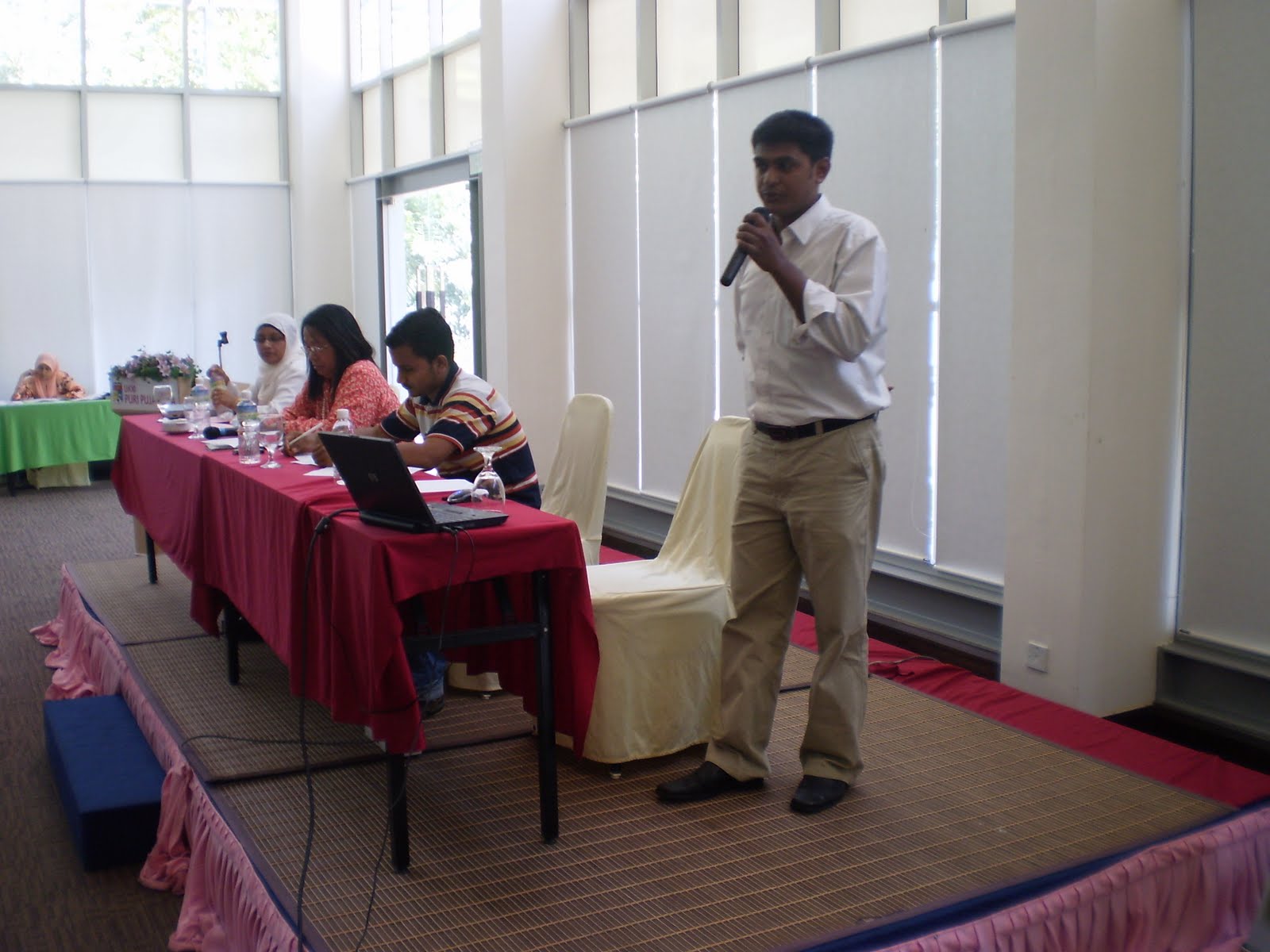
The above workshop was organized by IKMAS on 16 December 2009 at Puri Pujangga UKM to acquaint IKMAS Fellows and others interested in the study of transnational migration with the refugee population in Malaysia.
The focus was on the Rohingyas, a minority Muslim ethnic group from Myanmar who first arrived in the country in the mid 1970s. 


Numbering around 16,000 in October 2009, they are the second largest group accounting for over 27 percent of about 58,000 Myanmar refugees and asylum seekers in Malaysia. Unlike other refugees, they are stateless, as they have been stripped of their citizenship by the present government in Myanmar. The workshop was designed to provide a platform for the Rohingyas to explain and discuss their problems and plight with other participants and to foster links between them and the academic community which could be useful to both parties in the future.

About sixty people attended the workshop, of which forty were Rohingya leaders from different associations. The rest comprised academics from UKM, Universiti Utara Malaysia (UUM) and Universiti Malaysia Sabah (UMS) as well as representatives from the Malaysian Government. 

Through the paper presentations and discussions which followed the non-Rohingya participants were made aware of the extreme hardships faced by the Rohingyas and their vulnerable position which opens them to abuses and exploitation; and made many, the victims of trafficking across borders. The workshop concluded that there is an urgent need for them to seek intervention and assistance from related donor agencies at the national and international levels and to facilitate this, the workshop resolved that the Rohingyas must unite the various groups within the community and form an umbrella body so as to be able to deal effectively with these agencies.

IKMAS thanks all the participants, especially the Rohingya representatives who took time off from work to attend the workshop and make it a success.

Seven papers were presented, six of which were by representatives of the community. They were as follows:
Session 1: Background to the Rohingya Refugee
Population
Paper 1: Why and How Rohingyas Came to Malaysia
Speakers: Rafiqullah Islam (UKM) & Junight (UIA) &
Md Yassin (Rohingya Entrepreneur)
Paper 2: The Rohingya Refugees & the State in
Malaysia: A Profile
Speaker: Azizah Kassim (IKMAS, UKM)
Session 2: Leadership & Employment
Paper 3: Rohingya Refugee Associations: Leadership
Dilemma and Crisis
Speaker: Mohammad Sadek Ali Hosain (ARRC)
Paper 4: Earning a Living and its Challenges
Speakers: Abdul Hamid (USM)
Session 3: Social Issues & Challenges
Paper 5: Education for Rohingya Refugee Children:
Local Initiatives and External Support
Speaker: Muhammad Saifullah (Teacher)
Paper 6: Illnesses and Access to Health Services
Speaker: Habibur Rahman (ARRC)
Paper 7: Status of Women in the Rohingya Community
Speaker: Habsah Muhd Sukuma (UKM)

Tuesday, 6 April 2010

Letter from America: Rohingya Refugees in Bangladesh

Source from Asiantribune, 4 April 2010
By Dr. Habib Siddiqui

Habib_Siddiqui_21.jpg
When a widely circulated newspaper like the New York Times picks up the matter of ill-treatment of the Rohingya refugees in Bangladesh, it is no small matter.

It is a matter of grievous concern and shame to tens of thousands of Bangladeshi-Americans who live in and around the Big Apple state.
In its February 20 publication the headline read, “Burmese Refugees Persecuted in Bangladesh.” It said, “Stateless refugees from Myanmar are suffering beatings and deportation in Bangladesh, according to aid workers and rights groups who say thousands are crowding into a squalid camp where they face starvation and disease.” It described the situation as a humanitarian crisis.

The NY Times report should come as no surprise to many of us who have been following the inhuman condition of the Rohingyas around the world for a number of years. In its Special Report, dated February 18, “Bangladesh: Violent Crackdown Fuels Humanitarian Crisis for Unrecognized Rohingya Refugees,” the Doctors Without Borders (MSF) criticized the Bangladesh government for violent crackdown against the stateless Rohingyas in Bangladesh.

It was a chastising report in which the MSF called for an immediate end to the violence, along with urgent measures by the Government of Bangladesh and the office of the United Nations High Commissioner for Refugees (UNHCR) to increase protection to Rohingya refugees seeking asylum in the country.
Last month the Physicians for Human Rights (PHR) issued an emergency report, “Stateless and Starving: Persecuted Rohingya Flee Burma and Starve in Bangladesh”. This report reveals a PHR emergency assessment of 18.3% acute malnutrition in children. This level of child malnutrition is “considered “critical” by the World Health Organization (WHO), which recommends in such crises that adequate food aid be delivered to the entire population to avoid high numbers of preventable deaths.”

The extreme food insecurity causing this critical level of malnutrition is the direct consequence of Bangladesh government authorities’ restricting movement and, therefore, income generation of the Rohingya, and actively obstructing the amount of international humanitarian aid to this population.

Last week, the American Muslim Taskforce (AMT), an umbrella organization that includes the Council on American-Islamic Relations (CAIR) and the Islamic Circle of North America (ICNA), amongst other Muslim organizations in the USA, hosted a press conference in the National Press Club, Washington D.C. to discuss human rights abuses in Bangladesh. In his inaugural statement, Mr. Wright Mahdi Bray of the AMT brought up the squalid living conditions of the Rohingya refugees inside Bangladesh. In the last few years we have raised the Rohingya issue a few times with Bangladesh government, but have failed to improve the deplorable condition.

Denied citizenship rights and subjected to repeated abuse and forced slave labor in their ancestral homes in the Arakan/Rakhine state of Burma by a xenophobic Buddhist government, where they cannot travel, marry or practice their religion freely, and betrayed and battered by their Magh Rakhine co-residents, many Rohingya Muslims have hardly any option left for them to survive with dignity other than seeking refuge outside. The neighboring Bangladesh to the north-west with her huge Muslim population and historical ties with Chittagong and Cox’s Bazar, dating back centuries earlier during the Arakanese rule of those districts (1538-1666), provides a natural setting for seeking shelter. Thus, when the Burmese genocidal campaigns – Naga Min (1978-79) and Pyi Thaya (1991-92) – forced eviction of some 300,000 and 268,000 Rohingya refugees, respectively, to seek shelter outside it was Bangladesh where they ended up.

With the assistance of the UNHCR, Bangladesh repatriated most of those refugees back to Arakan. Still, however, tens of thousands of Rohingyas never returned, especially from the second batch of major exodus in 1991-92. The on-going Nasaka operation and targeted violence by the Rakhine Maghs inside the Rakhine state have also forced many Rohingyas to leave their ancestral land and return again to Bangladesh. Many of those refugees have often used Bangladesh as a transit point to seek better shelters elsewhere. Many of the Rohingyas have ended up in Saudi Arabia and other Gulf states, and also in Pakistan.
As noted recently by Syed Neaz Ahmad in a New Age article, the late King Faisal’s kind gesture to offer the fleeing Rohingyas a permanent abode in Saudi Arabia is no longer respected by the new rulers who have restricted their employment and movement within the Kingdom.

According to him some three thousand Rohingya families are in Makkah and Jeddah prisons awaiting their deportation. It is good to hear that the Pakistan government has agreed to take these unwanted refugees. (Islamabad can also do a noble job, albeit a delayed one for the past four decades, in taking some 300,000 stranded Pakistanis – living a miserable life in camps in Bangladesh.)
There are some 13,600 Rohingyas registered with the United Nations High Commissioner for Refugees (UNHCR) in Malaysia, an estimated 3,000 in Thailand, and unknown numbers in India.

Small number of Rohingya refugees also lives in Japan, Australia and the USA. The total number of Rohingya refugees living inside Bangladesh today is not known. The UNHCR stopped documenting the Rohingyas after 1991 as they shifted their focus to Africa and Eastern Europe. From my contacts within the Rohingya leadership, the estimate is around 400,000. Of these refugees, only 28,000 are recognized as prima facie refugees by the Government of Bangladesh and live in official camps under the supervision of the UNHCR. The official camp has everything: primary schools, a computer learning centre funded by the Bill and Melinda Gates Foundation, health care centers, adult literacy centers, supplementary food centers for children and pregnant women.

Except a handful of wealthy Rohingyas who have been able to settle comfortably within the big cities, the rest of the refugees struggle to survive unrecognized and largely unassisted and unprotected, living in dire humanitarian condition with food insecurity, poor water and appalling sanitation. They live mostly in and around Cox’s Bazar and the Hilly districts of Chittagong.

Some of the unfortunate refugees have also ended up living in slums of big cities like Dhaka and Chittagong. As reported by the MSF and the Amnesty International, these Rohingya refugees are treated as unwanted folks and have faced repeated beatings and harassment, including forcible repatriation to Myanmar. Many refugees, who had been repatriated to their country in the past, had entered Bangladesh again as they did not find any development and change in the attitude of the Myanmar authorities.

Some Rohingya refugees live at a makeshift camp in Kutupalong, south of Cox’s Bazar. Last June and July the local authorities destroyed 259 homes in that makeshift camp to clear space around the perimeter of the official UNHCR camp at Kutupalong. There was a crackdown in October in Bandarban District, east of Cox’s Bazar, forcing many Rohigyas to take shelter in the makeshift camp in Kutupalong. In January 2010, another crackdown followed the refugees living in Cox’s Bazar District. To add to the brutality of the authorities, the Rohingyas also suffer at the hands of the local population, whose anti-Rohingya sentiment is fuelled by local leaders and the media.

This was not the first time that this kind of problem emerged for the fleeing Rohingyas. In 2002 during the police action “Operation Clean Heart” many Rohingyas were violently forced from their homes, which led to the establishment of the original Tal makeshift camp on a swamp-like patch of ground. This camp relocated, and in the spring of 2006 MSF started a medical program at the new site, where at the time around 5,700 unregistered Rohingya lived in awful, unsanitary conditions on a small strip of flood land in Teknaf in the Cox’s Bazar District. After two years of providing humanitarian assistance, and following strong advocacy by MSF, which ultimately gained the support of UNHCR and the international community, the Government of Bangladesh allocated new land in Leda Bazar for around 10,000 people in mid-2008. Less than one year later, nearly 13,000 people were living in Leda Bazar Camp, their fundamental living conditions having changed little. According to the MSF, these people continue to struggle to survive without recognition and opportunities to provide for themselves inside an increasingly hostile environment.

With a total population of over 28,400, the unregistered Rohingya at Kutupalong makeshift camp now outnumber the total registered refugee population supported by the UNHCR in Bangladesh. The Bangladesh government has repeatedly stopped registration of those unfortunate refugees living outside the official camps. Without official recognition these people are forced to live in overcrowded squalor, unprotected and largely unassisted. Prevented from supporting themselves, they also do not qualify for the UNHCR-supported food relief. And sadly, the UNHCR, which is mandated to protect refugees worldwide, makes little or no visible protest at the injustice of this situation.

According to the MSF, the UNHCR is guilty of not taking the return of the Rohingyas as a priority issue. The Office of the UNHCR must take greater steps to protect the unregistered Rohingya seeking asylum in Bangladesh. The UNHCR must not allow the terms of its agreement with the government to undermine its role as international protector of the Rohingyas who have lost the protection of their own state - Myanmar, and have no state to turn to. Any failure to protect the Rohingyas inside and outside Myanmar is simply not acceptable. We are told that as a poor country, Bangladesh faces a dilemma about the Rohingya refugees.
If she shows too much flexibility a huge influx may occur, while being harsh creates concern among international community. Nevertheless, Bangladesh government’s forced repatriation of the refugees against their wishes is simply inhuman and violates international humanitarian laws. It must be immediately stopped, failing which its international image may suffer terribly.

It must also stop all harassment against the Rohingyas. Temporary residency permits should be provided to the refugees so that they can earn their livelihood like any other Bangladeshi. There is nothing worse than a forced poverty which leads to crime and other serious problems.

Should the refugees choose to leave Bangladesh for a third country the government should not hinder that process either. It must also make all diplomatic efforts to find shelters for these stranded refugees in sparsely populated and prosperous countries of Europe and North America, and the Gulf states.

The Rohingya refugees remain trapped in a desperate situation with no future in Bangladesh. These unfortunate people are caught between a crocodile and a snake: neither the xenophobic SPDC regime wants them back in Myanmar, nor does the Bangladesh government want them to stay because they are largely perceived as a burden on already scant resources. Outside China, none of the neighboring countries of Burma has ratified the 1951 Convention Relating to the Status of Refugees, its 1967 Protocol, the 1954 Convention Relating to the Status of Stateless Persons and the 1961 Convention on the Reduction of Statelessness. This must change by ratifying those conventions.

As the Thai boat crisis of 2009 made clear, regional comprehensive solutions are needed to the situation of the stateless Rohingya. The international community must support the Government of Bangladesh and UNHCR to adopt measures to guarantee the unregistered Rohingya’s lasting dignity and well-being in Bangladesh.

[This article is co-authored with Dr. Nora Rowley, a medical doctor, who as part of MSF worked with the Rohingya people inside Arakan. She is currently affiliated with the US Campaign for Burma.]
- Asian Tribune

Sunday, 4 April 2010

Demand Resettlement Option for Rohingya Refugees

Source: http://immigration.change.org/ April 03, 2010 


Burma is internationally recognized as a military state responsible for large-scale abuses of human rights. Ethnic minorities refusing to bow down to Burma’s military junta and its oppressive regime have been systematically run out of their homelands for decades. While thousands of refugees from Burma have been offered resettlement opportunities to rebuild their lives in counties like the U.S., Canada, and Australia, the crisis of the Rohingya refugees from Burma has been among the world’s most neglected and conspicuously ignored.

Today, in makeshift camps in Bangladesh, hundreds of thousands of Rohingya live in utter destitution. In search of economic opportunity, thousands of Rohingya men set out each year from Bangladesh to nearby Thailand and Malaysia on foot and in overloaded homemade boats. If they survive the often fatal journey, they are only met with further persecution. In 2009, Thai officials were exposed for unlawfully intercepting the Rohingya as they floated toward the shore, subsequently detaining them on a deserted island and then dragging them back to sea and certain death.

No matter where the Rohingya go, it seems, they are unwanted.
Perhaps worse than the physical conditions in which they live is the profound lack of hope of a better life in the Rohingya’s future. As it now stands, the Rohingya will live, suffer, and die in these oppressive makeshift camps, in Thai detention, or out at sea.

The United Nations High Commissioner for Refugees (UNHCR) is mandated to protect the world’s refugees. But where is the protection for the Rohingya?
UNHCR identifies three possibilities, termed "durable solutions," for lasting refugee protection. In order of priority, they are:
  1. Voluntary Repatriation, in which refugees willinging return to their original homeland.
Local Integration, offering permanent citizenship and full rights in the country to which the refugees have fled.
Resettlement, an opportunity to start one’s life anew with material and social services support in a well-resourced country (like the U.S.). Clearly, repatriation of the Rohingya to the oppressive regime in Burma is not a viable option. Local integration in Thailand, Bangladesh, and Malaysia, countries who have denied the the Rohingya basic rights and access to key services, is not realistic either.

Less than 1% of the world’s refugees are offered resettlement. But if resettlement is reserved for people who truly have no alternative, who, we must demand, is more deserving of resettlement than the Rohingya?
If granted resettlement, the Rohingya will have the chance to rebuild their lives in countries with support infrastructures and legal protection. Resettlement will save thousands of lives and create tangible opportunities for the next generations of the Rohingya.

Demand action from the UNHCR and the U.S. Office of Refugee Resettlement to prioritize the resettlement of the Rohingya refugees and offer them the protection they deserve.


Lauren Markham lives in her native Bay Area where she is a writer, educator and immigrant rights advocate, working for Refugee Transitions and the Oakland Unified School district.

Tuesday, 23 March 2010

Rohingya: It Began with project ABC

 Source from The Streets, 22 March 2010

Rohingya children from 46 families in Kota Tinggi wanted to learn but the legalities stood in their way. Then some Malaysians got involved with these ‘outsiders’ in their midst. Peggy Loh has the story

AFTER abnormal heavy rainfall throughout the week of Dec 18, 2006, a series of floods hit Johor and by the third week of January 2007, much of the state was swamped by massive floods. Urban areas were flooded and Kota Tinggi and Segamat were completely cut off. Various international non-governmental organisations and individuals came forward to provide aid.
 The seniors are grateful for the opportunity to study and hope the next step in education will not be closed to them. — Pictures courtesy of Mary Fernandez The seniors are grateful for the opportunity to study and hope the next step in education will not be closed to them. — Pictures courtesy of Mary Fernandez

Among the first on the ground was the Johor Baru Soroptimist International Club (SIJB).

As the floods subsided and rescue missions turned into rehabilitation programmes, SIJB president Mary Fernandez was approached by a Kota Tinggi church member to look into the plight of Rohingya children from about 46 families in that area.

 The Rohingya have learnt  discipline and good manners under the guidance of the school’s administration,  represented by (from left) SIJB president-elect Liza Alip, head teacher Tang Yau Kuang and SIJB president Mary Fernandez. The Rohingya have learnt discipline and good manners under the guidance of the school’s administration, represented by (from left) SIJB president-elect Liza Alip, head teacher Tang Yau Kuang and SIJB president Mary Fernandez.

Since Malaysia did not sign the 1951 Refugees Convention, the Rohingyas who had arrived in Johor were not allowed to settle here and their children could not attend government schools.

Aware that education was vital for children and that the children of these 46 families were not in any school, Fernandez wrote to the United Nations High Commissioner for Refugees (UNHCR) for permission to start a school for them in Kota Tinggi.

In November 2007, a memorandum of understanding was signed with UNHCR for “Project ABC” and SIJB started a school in a surau.

For about six months, 61 Rohingya pupils between the ages of 6 and 15, had classes sitting on the surau’s concrete verandah floor.

While the Kota Tinggi Rotary Club contributed towards the extension of the verandah and provided schoolbags, it was hardly an environment that was conducive for learning. So SIJB worked hard to raise funds to acquire a proper place for a school.

With the help of her children, Fernandez raised RM60,000 while SIJB’s sister club in Singapore, SI Garden City, obtained a donation of E 2,500 (RM11,150) from the De Beers Foundation.

With these funds, SIJB rented the top floor of a new shophouse in Kota Kechil and renovated it to make four classrooms.

SIJB also employed retiree Tang Yau Kuang, 62, a Mathematics teacher and former discipline master of SK Kota Tinggi Laksamana (originally Government English School) to head the teaching team.

When they moved into their school in May 2008, 65 children were grouped into four classes for age 5 and below, age 6 to 8, age 9 to 11 and age 12 to 15 (the seniors). School hours were between 8am and noon with a 20-minute break.

Project ABC’s syllabus had three subjects — English, Mathematics and Bahasa Melayu — but the school added a physical exercise class that was held in the corridor’s limited space.

“Our main objective is to help the children learn to read and write — and explain to parents why they have to pay RM5 for each child per month as a commitment fee,” said SIJB president-elect Liza Alip.

In February last year, the school was officially launched by Alan Vernon, the UNHCR representative in Malaysia.

Then in July, a computer company in Singapore sponsored four desk-top computers, while SI Garden City Singapore sponsored books, allowing a library to be set up.

While computer usage is limited to the older children to spur them on to learn the English language, all students have access to the library. The teachers are very encouraged to observe that these pupils who came in with zero knowledge can now sit quietly in the library, able to read simple stories in English.

Among the pupils who are progressing well are the Rashid siblings, Siti Zubaidah, 19, Siti Nurhudah, 16, Jamaluddin, 14 and Siti Nurain, 11. Older sister, Siti Zubaidah, who aspires to be a teacher, is given the opportunity to help with the younger classes but SIJB is concerned about the next step of education for youths aged above 16.

SIJB realises that the children are growing up fast and they cannot be financially independent unless they are equipped with a marketable skill.

“It’s better to teach them a skill than to let them go into crime,” Fernandez said.

Helping the pupils will not end when they are past school-going age, so SIJB is seeking ways to train the youth and equip them with skills in plumbing, carpentry, tailoring, mechanical or electrical wiring.

SIJB was recognised for its contribution to the community and received the 2008 Soroptimist International Region of Malaysia Best Practice Award for the Rohingya school project in Kota Tinggi.

It continues to welcome sponsors because the school operations depend solely on public funds for monthly expenses like staff salary, rental and utilities. SIJB seeks corporate sponsors and volunteers in future projects for pupils and invites interested parties to contact SIJB via email (sultanah@streamyx.com) or by telephone (016-741 8577 and 019-771 3877).


“Rohingyas deserve basic Human Rights and need protection of the Law for their security of Life and Liberty to make a decent Human Life, because they are Human Beings and as Citizen of a State where they were born and brought up, No more as stateless people. They want to live as Human Beings and as effective Citizen of Burma neither Politicle Foot-Ball nor Human Pin-Ball”.

Wednesday, 24 February 2010

UN examines mistreatment of Muslims in Myanmar

Source from The National 23 Feb 2010
 
BANGKOK // A United Nations envoy has expressed deep concern about the persecution of Myanmar's Muslims by the authorities. "There is no doubt that there is severe discrimination of Muslims," the UN special rapporteur for human rights in Myanmar, Tomas Ojea Quintana, said after visiting the west of the country where Muslims are concentrated.
Tomas Quintana, UN special rapporteur for human rights in Myanmar, has found evidence of discrimination against Muslims.

During his five-day mission, Mr Quintana, an Argentine former labour rights lawyer, visited Sittwe, capital of northern Rakhine state, and Buthidaung, one of the state's main towns and site of the most serious allegations of persecution and repression of the Muslims, often known as Rohingya. This is the first time a senior UN envoy has been allowed to visit this region although the UN and international aid organisations do have projects and people in the area.

"There have been many allegations levelled at the authorities, so it was important for me to be able to see the situation firsthand," he said. While he was there he also visited a prison, which was a real revelation, he said during an interview on the weekend. "The prison was full of women, some still nursing their young children," he said. Most had been charged with immigration offences and received sentences of up to five years. But human-rights groups believe they are victims of the government's ban on Muslims marrying.

"Men are often jailed for illegal marriages, but many, especially women, are arrested after travelling illegally [across the border] to Bangladesh to get married," said Chris Lewa, director of the Arakan Project, which monitors the situation of Rohingyas in the region. The UN envoy raised the issue of the alledged ban on marriage with the authorities, both locally and in the Myanmar capital, Naypidaw, and received the same answer. Muslims, like everyone, have the right to marry, but they have to have the correct birth certificates and citizenship papers.

This is the crux of the matter, according to human-rights groups and aid workers who know the area and monitor the situation there. "Myanmar's Muslim minority are subject to systematic persecution: they are effectively denied citizenship, they have their land confiscated, and many are regularly forced to work on government projects," said Benjamin Zawacki, Amnesty International's Myanmar researcher based in Bangkok.
"The regime creates conditions and circumstances that make it clear to the Rohingyas that they are not wanted or welcome in the country," he said. More than 300,000 Rohingyas are in camps or hiding in neighbouring Bangladesh to escape the persecution across the river in Rakhine, according to the UN. More than 700,000 Rohingyas still live in Myanmar. Mr Quintana singled out Rakhine for his visit after persistent stories of persecution that included forced labour, extortion, land confiscation, travel restrictions, banned marriages and unregistered children. On his last visit to Myanmar, in 2009, his request to visit the area was denied.
Because the authorities refuse most Rohingyas permission to marry, many live together after a traditional Muslim ceremony. The children born from these couples are denied registration and citizenship - making them non-persons. Mr Quintana took up the issue of citizenless children in his last report to the UN in November and pressed representatives of the regime on it again during this visit, but with little result.
"The issue of unregistered children is serious as their numbers keep growing," Ms Lewa said. "What is the future of these children? Without being registered, they won't be able to apply for a travel permit, marriage, and so on. They are all potential refugees." Mr Quintana's visit to Rakhine was a significant concession by the regime. "I received a lot of independent information from various sources before I went there, and I find them very credible."

The envoy said he did not have time to verify all the claims in the reports, but from what he saw he believed they were relatively accurate. "And I hope by visiting there I can help highlight the plight of Myanmar's Muslims," he said. Overall, the UN envoy was downbeat about his trip. "Political prisoners, of which there are more than 2,100, will not be released anytime soon," he said. "The government continues to deny that there are any prisoners of conscience in their jails."

Mr Quintana wanted to impress upon the authorities that the release of all political prisoners before this years planned elections was essential if the electoral process was to be convincing. "These are well-educated and capable people who could participate in the election and help make the whole process credible, I told the authorities," he said. Mr Quintana did not hold out much hope of change in Myanmar in the near future.

Myanmarese officials would not discuss the elections in detail even though it was evident that preparations for the polls were already in full swing. All that the men in charge of the elections would say was that the legal framework was being prepared and the electoral law would be finished in time. foreign.desk@thenational.ae

Tuesday, 9 February 2010

Nowhere to Turn

Source from Irrawaddy news magazine Vol.18 No.1, Jan 2010
A woman in leda refugee camp, one of the offcial camps in Cox’s Bazar. (Photo: ALEX ELLGEE)

Many homeless Rohingya prefer hunger in a hostile land to life in Burma

I’ve lost everything in my life and now I can only pray that I don’t get sent back to Burma,” said Haziqah, a 27-year-old Rohingya resident of the unofficial Kutupalong refugee camp in Bangladesh.

Before joining the camp, Haziqah lived in the Bandarban Hill Tract, about 150 km [93 miles] to the north, where many Rohingya refugees from Burma have settled. She and her husband managed to survive on the meager wages he earned from odd jobs in the area and were starting to hope they could lead a normal existence.


Rohingya men gather round to listen to Haziqah tell her story. (Photo: ALEX ELLGEE)

But then, one morning seven days after giving birth to her first child, soldiers from the Bangladeshi border force, the Bangladesh Rifles (BDR), stormed their village. Rounding up all the Rohingyas living there, they marched them toward the Bangladesh-Burma border.

During the march, she said, the soldiers beat her husband severely and pushed her along, ignoring the week-old baby in her arms. When they reached the top of a hill bordering Burma, the soldiers simply gave them a shove to send them back to the country from which they had fled.

In the chaos, she was separated from her husband; she later received reports that he had been captured by the Nasaka, the Burmese border force operating in Arakan State. She and some other women hired a boat to take them back to Bangladesh. By the time she arrived there her baby had died.


People in Kutupalong camp collect water from wells provided by Action Contre la Faim (Action Against Hunger). (Photo: ALEX ELLGEE)

Similar stories of BDR brutality are told by new arrivals at the makeshift Kutupalong camp. Like Haziqah, many of the women have been separated from their husbands and must struggle to find food and look after their children.

Since tensions peaked in August between Bangladesh and Burma’s ruling State Peace and Development Council over the Burmese regime’s construction of a border fence, arrests and forced repatriation of Rohingya refugees dramatically increased. More than 5,000 Rohingyas were sent back to Burma in October and November.

Since the start of the Muslim holiday of Eid ul Adha in Bangladesh at the end of November, a temporary halt appears to have been called to repatriations, according to nongovernmental organization (NGO) workers employed in the camps.

It’s believed that a visit by a Dutch diplomat and three European humanitarian ambassadors may also have put pressure on the Bangladeshi authorities to stop sending Rohingyas back to Burma.
However, despite fears that the repatriations will start again, families continue to flee to the unofficial camp, even though it receives no food aid, unlike the official camp next door. Three hundred families reportedly arrived at the Kutupalong camp in November.

The Bangladeshi government refuses to accept Rohingyas who arrived in the country after 1991 as refugees and instead labels them illegal migrants, leaving them to fend for themselves. If they find work in the surrounding area, they risk arrest.

Zawpe, a Rohingya leader in Kutupalong camp, said fear of arrest prevented many migrants leaving the camp in search of work.

“Because of the travel restrictions, conditions in the camp are very bad,” he said. “People are too afraid to go outside to find food. The food crisis is alarming.

“The government doesn’t let NGOs give us food, we are not allowed to work for food and the local communities don’t want us to, so we are starving. It’s 1 p.m. and most of the camp hasn’t eaten yet. If the situation continues like this, then people will die.”

Zawpe said migrants also risk being hunted down by Bangladeshis, who then hand them over to the authorities.

Living in a No-man's Land

Source from Irrawaddy news magazine Vol 18, No.1, Jan 2010

The Rohingya of northwestern Burma are fleeing to Bangladesh, where unofficial, makeshift refugee camps are rapidly expanding. The plight of the Rohingya in Burma and Bangladesh has grown worse during the past year.

Burmese authorities enforce a policy that promotes a form of ethnic cleansing, based on repressive regulations aimed at the Rohingya, who must apply for permission to move from one village to another, to repair local mosques, even to get married—rights that are routinely denied. They are excluded from jobs and other opportunities because of discrimination based on their Muslim religion. Thousands continue to flee to Bangladesh to find a better life, only to be isolated in crude, unofficial camps, such as the makeshift Kutupalong camp which has sprung up during the past year near Cox’s Bazar.

 
Slide Show (View)
Conditions are dire inside the camps. Refugees live with little humanitarian assistance. Rohingya seeking work are discriminated against by Bangladeshis, who often refuse to hire them or otherwise exploit them as a source of low-paid labor. In the unofficial camps, there are no medical services and drinking water is unsafe. Many Rohingya choose to flee the country by boat, risking a perilous sea voyage in a small boat at the mercy of pirates and smugglers.

To make matters worse, Burmese authorities have begun constructing a 200-kilometer [125-mile] fence along the border designed to prevent cross-border access. Meanwhile, the Rohingya say they are trapped in a no-man’s land and neither country offers them a way of life that provides freedom and opportunity. 

Tuesday, 12 January 2010

US Must Admit More Rohingya Refugees

Irrawaddy 11st Jan 2010
 
Jhora Khatul crouches on the bamboo floor, while curious neighbors, friends and family swarm into the darkened room to hear her story. The room is soon packed and full of smoke from the make-shift kitchen, making it hard to breathe.

As Jhora begins her story, there are nods of recognition; her fellow refugees share the same experiences. Jhora has been living for more than one month with 12 family members in this small hut in Leda camp, Bangladesh.

Jhora is an unregistered Rohingya refugee. She fled to Bangladesh after her family’s farm in Burma was ransacked, their livestock confiscated and her husband tortured. Since then, she says, life in Bangladesh has been “day-to-day…there is no future to plan.”
Her husband works as a day laborer, but she says the little money he earns is never enough to feed the family, which often goes to bed at night fighting hunger pains.
For many Rohingya refugees like Jhora, the decision to flee to Bangladesh was a difficult one. Since 1982, the Rohingya have been deprived of citizenship in Burma, meaning they are not protected by national laws and their basic human rights are severely restricted.


Burma’s Rohingya need permission to marry or travel. They have been prohibited from practicing their Muslim faith, and they are denied access to public education and health facilities.
Because of these dismal conditions the Rohingya are fleeing to countries such as Bangladesh or taking risky, often life-threatening journeys by boat to Malaysia and Thailand seeking refuge from persecution. Once in these countries of asylum, their options are still restricted because of their status as refugees.
One refugee said: “We have nothing here in Bangladesh. Our needs are not met here. We can’t really work or live in Bangladesh, but we also can’t return to Myanmar [Burma].”

As a nation that nominally respects global human rights, Bangladesh has a duty to protect and provide basic services for the Rohingya refugees, and for decades Dakha has been doing so.
Opportunities for integration are restricted, however.

Denied the right to work and facing extreme restrictions on engaging in wage-earning activities, the Rohingya are completely dependent on aid. Such assistance, however, is insufficient to meet their basic needs for security, health care, sanitation and primary education.
Because the situation is likely to persist, there must be a more long-term solution. The Rohingya will continue to be dependent on aid, incurring increasing costs for Bangladesh and international donors unless there is progress towards integration that allows the Rohingya to engage in legal wage-earning employment or income-generating activities.

A durable solution to the displacement of the Rohingya cannot come from Bangladesh alone, however. The US, in particular, should further integrate the Rohingya into its refugee resettlement program.
Far fewer Rohingya are resettled than other Burmese refugees. In 2008, the US resettled 17,000 Burmese refugees, but it wasn’t until 2009 that Rohingya were admitted to the program—and even then only a few families found new homes in the US.

Although resettlement cannot be the only solution for the Rohingya, it is a critical factor in seeking a long-term solution to their displacement through the offer of citizenship. Further resettlement of the Rohingya in the US would demonstrate Washington’s commitment to seek durable solutions for refugees and provide opportunities for Dakha to support integration and programs that promote self-reliance.
The choice between living in a Bangladesh refugee camp or in Burma under a hostile regime is, as one refugee said, like having to decide whether to “jump into the river or the sea”.

The Rohingya have been subject to this dilemma for decades; the choice between languishing inside the confines of a refugee camp, living without documentation or legal protection in a foreign country, or existing under a regime that not only refuses to recognize them as citizens but systematically persecutes them.
It is a difficult decision for the Rohingya to seek refuge by crossing borders, but Bangladesh and the US, as nations that respect human rights, have a duty to protect the persecuted.

K. Crabtree qualified in International Law from New York University, and has conducted field research with the Rohingya refugees in the Kutupalong and Leda refugee camps in Bangladesh. Her research has been published in Forced Migration Review and will soon appear in the Journal of Muslim Mental Health. As a US Peace Corps volunteer she worked in Gazipur and Cox’s Bazar, Bangladesh.

Friday, 1 January 2010

Situation of Roh Children in Malaysia

by Saiful,

Today, the children of Rohingya refugees are struggling with their future to be saved as they are not recognized as refugees by the both Malaysian government to have access to education and UNHCR as mandated refugees to get resettlement like other refugees. They are marginalized and in languishing in horror situation. Their children are deprived of basic right to education, victims of exploitation and going to be a generation of beggars in Malaysia. As per we know, two things can destroy a nation, illiteracy and poverty. Unfortunately, if we see the ethnic Rohingya, an estimated literacy rate of the Rohingya children both in home and exile are less than 0.5%. Literacy rate in Malaysia is “0”%.
It is very pitiful situation for the Rohingya community and true that Rohingya nation has lost their future. So, the education is most important to develop to any nation and to know what is the right and wrong things to get the basic rights in the future.

According to statistics issued by UNHCR Malaysia as of last October 2009, about 67,800 refugees and asylum-seekers were registered with the Refugee Agency. Of this figure, 62,000 are refugees from Burma, comprising 28,100 Chin, 16,100 Rohingya, 3,700 Burmese Muslims, 2,900 Kachin and other ethnic minorities.

Based on the available statistics, 51 per cent of the refugees and asylum-seekers were men while women made up 49 per cent. There were 14,600 children below the age of 18.
UNHCR Malaysia said there were also a large number of persons of concern to the agency who remained unregistered and the figure was said to be around 30,000. Believe there is also being a large number of children who are not yet granted refugee status.

The children of the Rohingya community in Malaysia do not have the privilege to study in government schools as they do not have birth certificates or any other official documents. Under the Malaysian Education Act (1966) only three categories of foreigners are permitted to enroll in government schools i.e the children of foreign embassies, children of foreigners who have legal work permits and those who have been granted permanent resident status.

Rohingyas arrived in Malaysia in early 1980s. More than 70% of Rohingya children are of school age. They could enter public schools, but as refugees, they were expelled out from the government school in early 2006, while very few numbers of Rohingya children got chance to study in public school as adopted children of local Malaysian. But still there is no any record a single Rohingya child from refugee community could manage to be a university student ever. Some managed to go through the categorized as “permanent resident,” which means they must pay higher fees, buy their own books and face a lot of red tape. Most cannot afford the extra costs. Access is also restricted as most of the refugee children do not have birth certificates, a legal prerequisite for admission.

The children of Rohingya in Malaysia are not recognized and are at greater risk of statelessness than their parents. Though they get birth certificates but they do not get any right to attend school. In past two decades, our unfortunate Burmese ethnic Rohingya children who have been born and grown up in Malaysia do not have access to government schools although primary school education is compulsory and available free to all in this country. And hence, the stateless children have not been able to develop their knowledge, skills, personality, talents etc.

Approximately there are more than 5,400 Rohingya refugee children in Malaysia are of school age. According to UNHCR report, they have not received basic education due to financial and bureaucratic obstacles. But I believe the main feature is that Rohingya children cannot enroll in public schools because Malaysian law does not recognize their refugee status.
That resulted most of them are working in odd jobs like construction sites, garbage collectors which should be considered as child labor.

Education is backbone of the Nation; Today’s children are tomorrow’s future. Peculiarly, Rohingya children in Malaysia don’t have access to get education. Rohingyas existence as a nation or ethnic group of Burma is depends on their children. Without education they are blind and unable to fight for their future due to lack of knowledge. We can for see what will happen to the Rohingya refugees and their children living in Malaysia if nothing is done to help them?

However, in 1998, Yayasan Salam came up to help to educate some Rohingya children in Kampung Cheras Baru as an implementing partner of UNHCR and that project was terminated in 2000.

From the year 2001, ABIM stood to fund for that school with a view to giving read and writeable education to some 50 children.

Similarly, the UN refugee agency partnered with a non-governmental organization, the Taiwan Buddhist Tzu-Chi Foundation, opened five new education centers within the Klang Valley in 2008, serving some 300 Rohingya refugee children. The project received funding from the United States government, bringing education to the Rohingya community on an unprecedented scale in Malaysia.

Likewise, from January 2008, UNHCR extended a supportive hand to facilitate primary education to the Rohingya refugee children in Tasik Permai, Tasik Tambahan, Taman Muda, Kampung Pandang and Selayang respectively. As per my study, those schools are also not fully equipped.

But those 5 schools are based within klang valley only. Mostly the Rohingya live in Penang and Johor. But their children are still deprived of basic right to formal education. Thanks to a humanitarian NGO, JUMP Network Group, while helping Rohingya children in penang in 3 schools.
Recently there is another school supported by Muslim Welfare Association of Malaysia (PERKIM), a local NGO chaired by Tun Dr. Mahathir Mohamad, the former prime minister of Malaysia since September 2009. That school is situated in Lamba Jaya, Ampang. There are 3 teachers including a religious teacher and 120 students enroll regular classes. All the expenditures of school and students such as rental, accommodation, text books for children, necessary material are conducted by PERKIM. The sad reality is that two of UNHCR’s five schools closed down as all the students shifted to PERKIM School.

In Johor Baru, there are some schools set up by privet initiative of Rohingya community to educate their own children but due to lack of fund unable to go further and waiting to get any assistance from UNHCR or any GNO to develop school curriculums as minimum standard.
According to strategic country plan by UNHCR, the 2010-2011 UNHCR budgets for the protection of children is USD $209, 825 and for the refugee education in Malaysia is listed USD $1, 555, 717. Rohingya community hope on that issue, UNHCR may set up some more schools for Rohingya children in different places like Klang, Johor and Penang if the decision of government remains unchanged.

In addition, Harvest Centre Sdn Bhd, set up an informal school in Sentul. About half of the centre’s students are Rohingya refugee children. Believed to be Malaysia’s first Montessori school for marginalized children, Harvest Centre was set up in 2004 with seed funding from World Vision and is run on public donations. The school, which has qualified and full-time staffs and a host of volunteers, and entered as an implementing partner with UNHCR but there is not more than 200 Rohingya refugee children studying.

After nearly two decades in Malaysia without education for their children, Malaysia’s 16,100 registered Muslim Rohingya refugees from Arakan state of Burma are especially hungry for formal schooling.

Future Global Network Foundation (FGN) a local NGO has been helping the local coordinators of the Rohingya communities in some settlement areas. FGN only supports 500 ringgits for 12 religious teachers in 9 different education sectors since 2007.

There is another school namely “Darul Uloom Blossom Garden” Kampung Sungai Pinang, Klang, Two teachers are in charge of religious studies; 1 teacher for teaching English, Maths and science. FGN can only support for two religious teachers due to insufficient funds. There is no teacher available for the teaching of Bahasa Malaysia at the moment.

The complaints of Rohingya children have been spread out that most of them are involved in beggar’s path. Why they are begging and what is the main reason behind it? In my study, the key spur is education. So I hope and strongly believe that only education would take the refugee children off the streets and prevent them from becoming a generation of beggars apart from being dragged into being part of the ‘bad hats’.

It is true to be heard that there are two groups of Rohingya children who took to the streets as beggars in Malaysia.

On one side, the children were in the clutches of a triad from some their own ignorant people and local gangs who paid some money to the parents of the children and the children themselves before sending them out to the streets to beg which is believed to be a part of exploitation.
“The other group is that who have no choice but to beg and begging is the easiest form of earning a livelihood on the name selling books”.

A notable example of such inconsistencies relates to the government’s statements regarding Rohingyas in Malaysia In 2004, the Government announced that it would consider regularizing the status of existing stateless Rohingyas in Malaysia, to enable them to legally work and live without fear of arrest from the enforcement agencies… The Rohingya were so glad and hoped their children would be able to attend for public school. However, to date, this policy does not appear to have been implemented.

Issues also arise with regards to the status of the children of Rohingya refugees who are born in Malaysia. Since their parents are undocumented, such children are more often than not, hindered in obtaining birth certificates and other identification documents which would facilitate their access to basic needs including medical care and education.

“To me, the only way to get these people out from the clutches of poverty is through education. We can give them food, for few days or give them money but money is never enough. “We need to empower them, especially the children, teach them how to find out food, not just giving them packets of food, so they can stand on their own two feet and become the master of their own destiny. What if one day we are not here anymore and also the people who are helping them?

“I have been teaching refugee children for 3 years, now in Klang. That school was set up in 2006 by some Rohingyas and still all the expenses are born by the community. The children are great, very responsive and excited to learn but being refugees they are unable to enjoy their full rights to education with full equipments like public schools.

It is satisfying to see the glow on their innocent faces as they respond to my teaching. They also love drawings, playing football and netball.

“They are practically living with no hope, no dreams and no tomorrow, nothing. I am helping them straight from my heart. My goal is, let’s say out of 63 students, if I can get one into university or can get a doctor or engineer; this is already a huge reward for me in my life. May be it will take some time but I am willing to do this forever.

Thus, there is still room for optimism notwithstanding the current plight of refugees in
Malaysia. As long as the authorities accept deficiencies in the current status quo and are willing to engage in dialogue to redress the situation, there is still room for hope. For everyone’s part, we can continue to work to increase awareness of children’s rights, and to encourage the government to adopt comprehensive and long-term refugee children protection policies, beginning with accession to the Child Convention and amendment to relevant immigration laws and other policies affecting refugees in Malaysia. For the time-being, we can also continue to encourage the government to adopt interim measures to alleviate at least some of the problems faced by refugee children, for instance, by encouraging the government to grant registered refugees with the right to seek and obtain employment lawfully, and to have access to basic needs such as shelter, food, healthcare and particularly education.

Malaysia has ratified the Convention of the Rights of the Child (CRC) and is thus obligated to protect all children, including migrant, asylum-seekers and refugee children. In the 2007 Concluding Observations of the Committee of the Rights of the Child, the Committee has expressed concerns over various aspects of migrant, asylum-seekers and refugee children including detention.

The Committee specifically recommends the Malaysian Government to stop detention of children in relation to Immigration proceedings and to develop a legislative framework for the protection of asylum-seekers and refugee children.

We would like to request to the Malaysian Government to fulfill its obligation to protect the rights of children, regardless of the child’s citizenship. In addition, the Government is obligated to provide protection to asylum seekers and refugee children as according to Article 22 of the CRC.

We believe the Government will ensure that the refugee children are secured and not subjected to any violence or negligent treatment during arrest and detention and provide basic assistance through formal education.


“Rohingyas deserve basic Human Rights and need protection of the Law for their security of Life and Liberty to make a decent Human Life, because they are Human Beings and as Citizen of a State where they were born and brought up, No more as stateless people. They want to live as Human Beings and as effective Citizen of Burma neither Politicle Foot-Ball nor Human Pin-Ball”.